Get Quote: Custom & Wholesale Embroidery Fabric
Comprehensive insights for global textile buyers, fashion brands, and designers in 2026. Quick Navigation 1.…


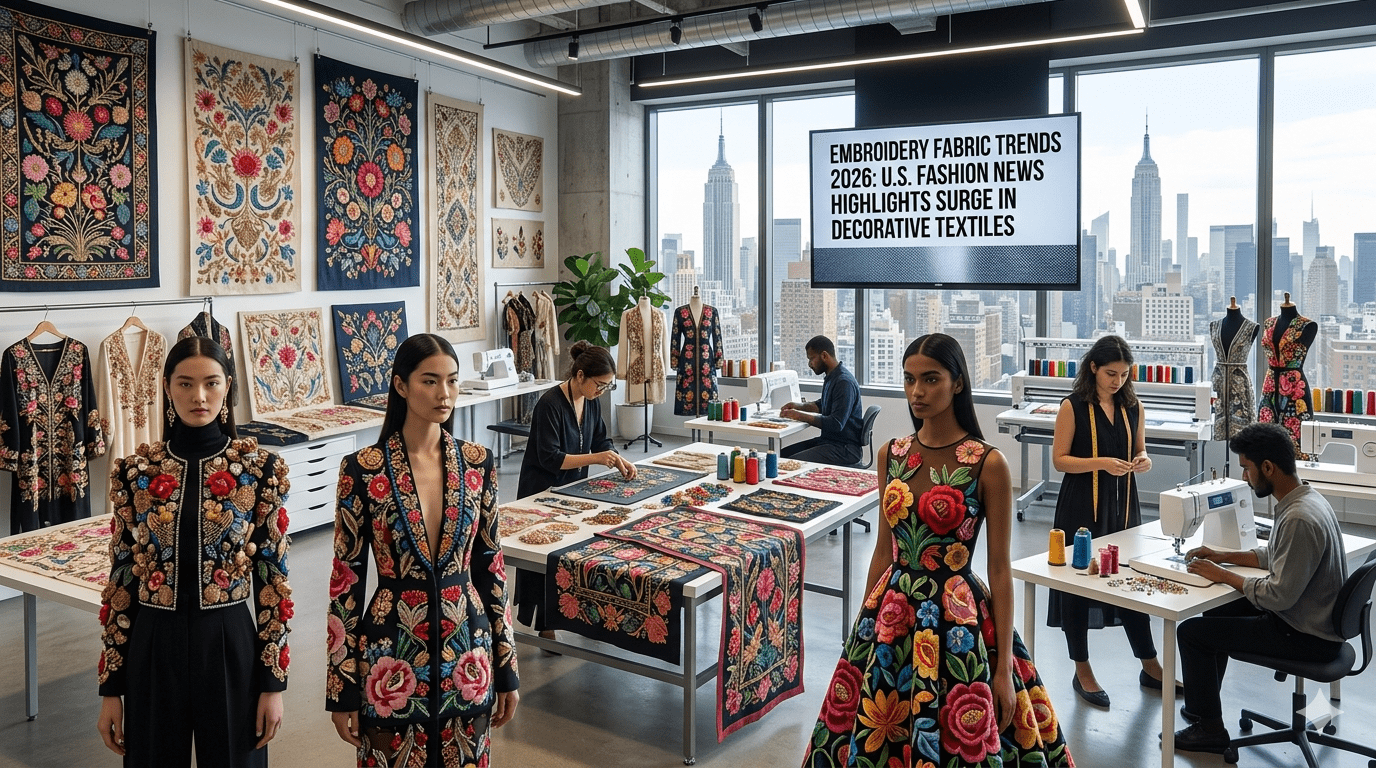
The latest U.S. fashion news reveals that decorative textiles, especially embroidery fabric, are dominating 2026 runway trends. Designers are shifting toward “opulence” and expressive materials, with embroidery, lace, and textured fabrics becoming central design elements rather than secondary details. :contentReference[oaicite:0]{index=0}
This shift reflects a broader transformation in textile trends. Embroidery fabric is no longer limited to traditional uses. It is now a key driver of innovation across fashion, home décor, and lifestyle products.
What defines embroidery fabric in 2026? The answer lies in a blend of tradition and technology. Industry data shows that embroidery is evolving through sustainability, digital design, and advanced production methods. :contentReference[oaicite:1]{index=1}
These trends show that embroidery fabric is becoming more versatile and commercially valuable than ever.
The rise of embroidery fabric is reshaping the U.S. textile market. Reports indicate strong growth driven by digitalization, automation, and consumer demand for customized products. :contentReference[oaicite:2]{index=2}
In addition, embroidery fabric is gaining traction across multiple product categories:
Buyers are increasingly seeking embroidered lace fabric and decorative textiles that combine comfort with visual appeal. :contentReference[oaicite:3]{index=3}
Why should businesses care about embroidery fabric trends? Because they directly influence purchasing decisions and product development.
For brands, embroidery fabric offers differentiation. It adds texture, storytelling, and perceived value. For wholesalers and suppliers, it creates opportunities for:
As textile trends continue evolving, companies that invest in embroidery innovation will stay ahead in a competitive market.
What is embroidery fabric?
Embroidery fabric is a textile decorated with stitched patterns, often used in fashion, home décor, and accessories.
Why is embroidery fabric trending in 2026?
It aligns with current textile trends focusing on decoration, personalization, and sustainable materials.
How is technology changing the embroidery industry?
Digital tools, AI design, and automation are improving efficiency, customization, and scalability.
Is embroidered lace fabric still in demand?
Yes. It remains a key material in both high fashion and commercial textile applications.