
A professional B2B case study exploring how custom embroidery fabric solutions help fashion brands improve product differentiation, sourcing efficiency, and premium market positioning in 2026.
Project Overview
In 2026, fashion brands are increasingly investing in custom embroidery fabric to create premium collections with stronger visual identity and higher market value. This case study demonstrates how a European womenswear brand collaborated with a professional embroidery fabric production partner to develop exclusive textiles for luxury evening dresses and resort wear.
The project required lightweight mesh bases, detailed floral embroidery, metallic thread integration, and highly stable production consistency. The client also needed rapid sampling and flexible production support to meet seasonal collection deadlines.
By implementing customized embroidery solutions, the brand improved premium product sales by 32% while reducing sourcing lead time by nearly 20%.
Brand Challenges Before Customization
- Limited differentiation using stock embroidery materials
- Inconsistent embroidery density between batches
- Difficulty matching Pantone seasonal colors
- High MOQ requirements from traditional factories
- Slow sample development cycles
- Weak scalability for international retail expansion
The client needed embroidery fabrics suitable for couture-inspired garments while maintaining industrial sewing compatibility and stable export quality standards.
Custom Embroidery Fabric Development Solution
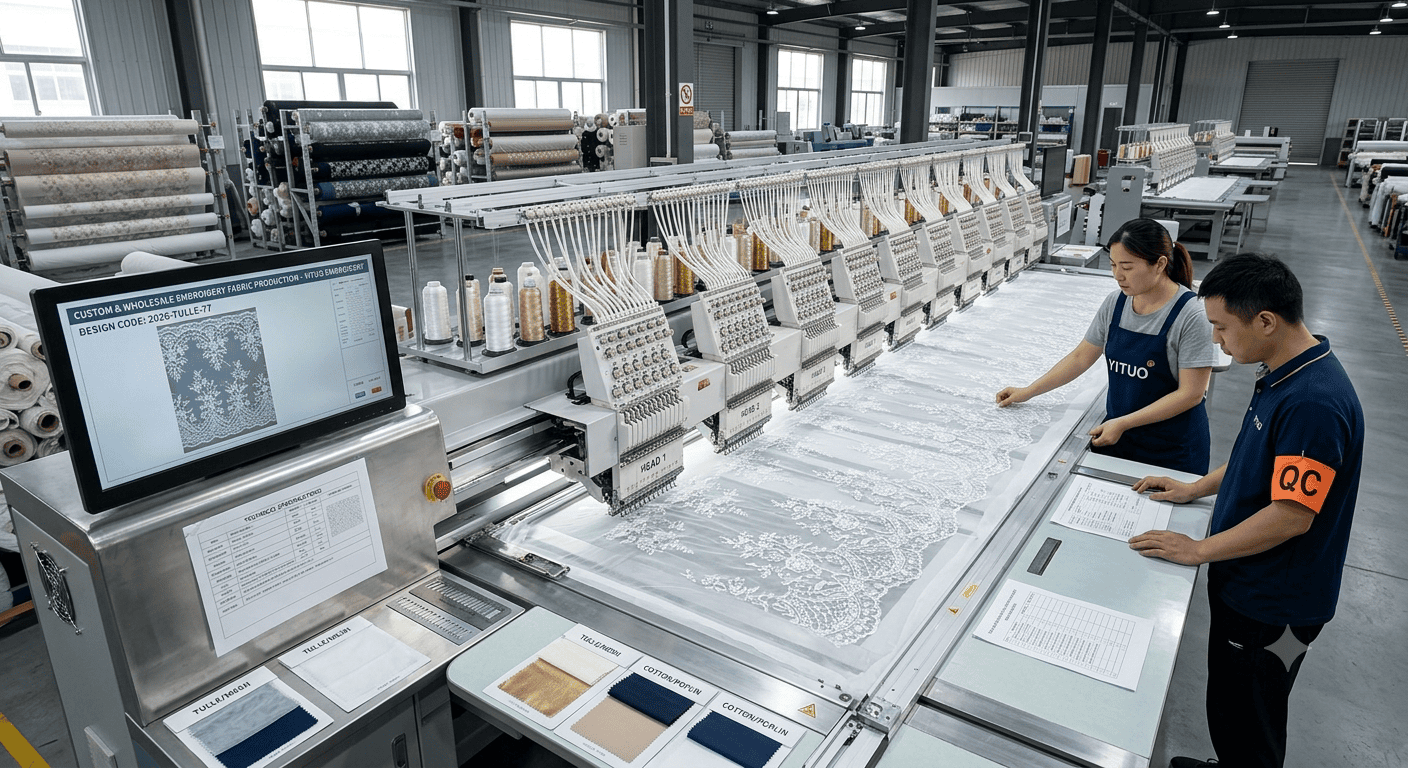
The development process focused on creating fully customized embroidery layouts using recycled mesh bases and premium embroidery yarns. Multi-head computerized embroidery systems enabled precise control over floral motifs, embroidery density, and decorative finishes.
The project incorporated:
- 3D raised floral embroidery
- Laser-cut edge finishing
- Metallic thread integration
- Sequined embroidery applications
- Custom Pantone color matching
- Lightweight soft-touch mesh structures
To support global distribution, the supplier also optimized moisture-resistant packaging, roll inspection systems, and export-safe loading procedures.
Technical Specifications Comparison
| Parameter | Standard Fabric | Custom Embroidery Fabric |
|---|---|---|
| Base Material | Conventional polyester mesh | Recycled premium mesh |
| Embroidery Density | Medium | High-density adjustable embroidery |
| Color Matching | Limited | Pantone custom matching |
| Lead Time | 35-45 days | 20-30 days |
| MOQ Flexibility | High MOQ | Flexible development MOQ |
| Application | General fashion | Luxury dresses & couture garments |
Professional B2B Quality Inspection Standards
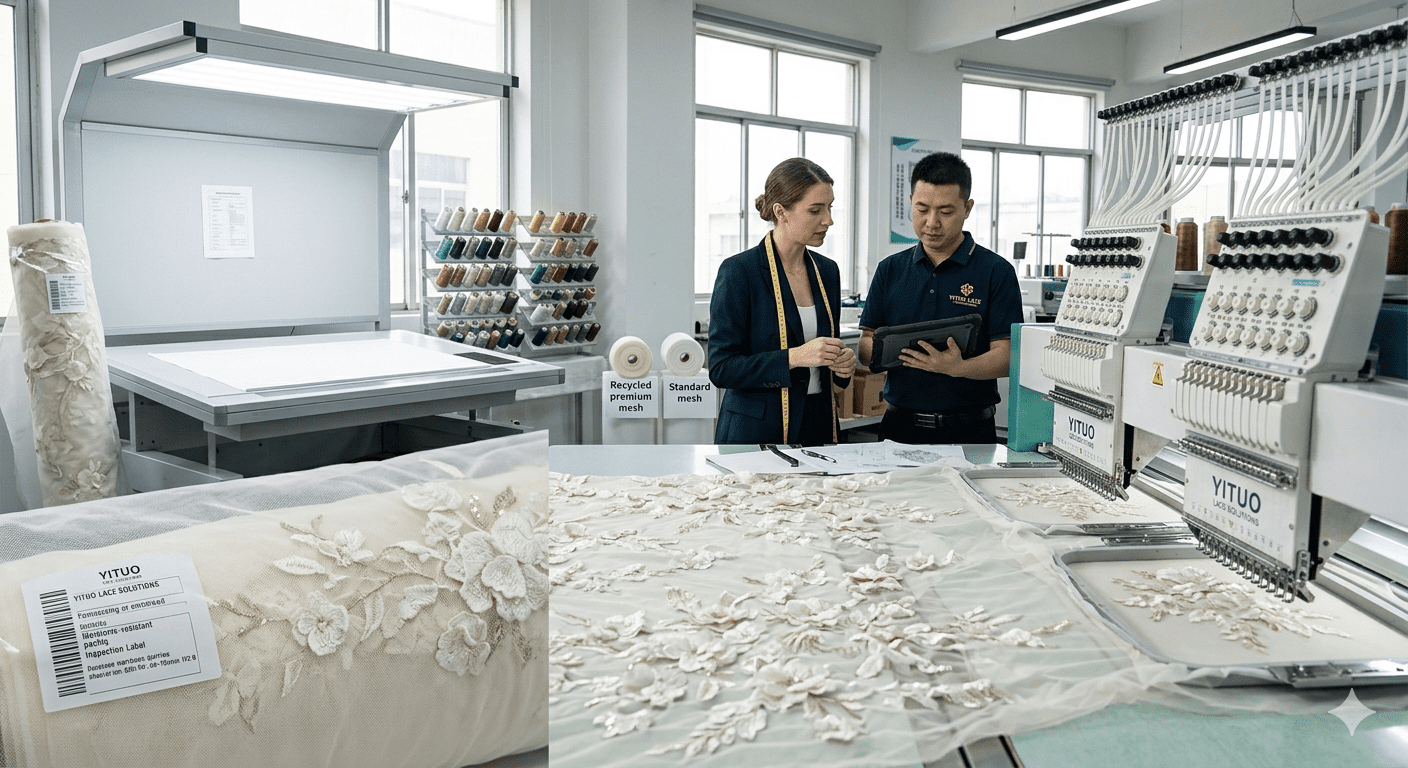
For global B2B buyers, embroidery fabric quality inspection is essential before shipment approval. Professional manufacturers apply strict quality control standards to guarantee batch consistency and export compliance.
- Embroidery Alignment: Pattern deviation controlled within 2mm tolerance.
- Thread Fastness: Tested for rubbing, washing, and light resistance.
- Fabric Stability: Shrinkage maintained below 3% after washing.
- Needle Damage Inspection: Mesh integrity checked under industrial lighting systems.
- Roll Consistency: Embroidery density consistency verified across every production roll.
- Metallic Thread Durability: Oxidation resistance tested for export quality assurance.
AI-assisted fabric inspection technologies are becoming increasingly common in advanced embroidery production facilities in 2026.
2026 Embroidery Fabric Industry Trends
The embroidery textile market continues to evolve rapidly due to sustainability demands and luxury fashion innovation. Several trends are reshaping sourcing strategies worldwide.
3D Embroidery Technology
Raised embroidery textures and sculpted floral effects are widely used in couture fashion and bridal collections.
Sustainable Materials
Recycled mesh bases and eco-friendly yarns are becoming essential for environmentally conscious fashion brands.
Metallic Design Trends
Gold and silver metallic embroidery finishes are increasingly popular in luxury eveningwear collections.
Digital Sampling Systems
3D embroidery simulation technology significantly reduces sample development costs and approval time.
Recommended Embroidery Fabric Resources
Explore professional sourcing solutions, factory-direct production capabilities, and premium embroidery textile collections designed for fashion brands, wholesalers, and garment manufacturers worldwide.
Embroidery Fabric Manufacturer Services
Discover customized embroidery fabric development, OEM production support, and scalable manufacturing solutions for global fashion brands.
Wholesale Embroidery Fabric Supplier
Source premium-quality embroidery textiles with reliable export support, flexible MOQs, and consistent bulk production quality.
Wholesale Embroidery Fabric
Browse large-scale embroidery fabric collections suitable for bridal wear, evening dresses, couture garments, and fashion accessories.
Embroidery Fabric
Learn more about embroidery fabric types, material structures, decorative applications, and textile customization possibilities.
Care & Maintenance Recommendations
Proper maintenance is essential for preserving embroidery fabric quality throughout the garment lifecycle.
- Store fabrics in humidity-controlled environments.
- Avoid prolonged direct sunlight exposure.
- Use low-temperature steam pressing methods.
- Apply protective packaging during transportation.
- Recommend gentle washing instructions for end users.
Many premium fashion brands also request wrinkle-resistant and anti-static finishing treatments for enhanced garment presentation.
FAQ for B2B Buyers
What is the MOQ for custom embroidery fabric?
MOQ depends on embroidery complexity, yarn selection, and fabric base materials. Most professional factories offer flexible options for new collection development.
How long does production usually take?
Sampling generally requires 5-10 days, while bulk production commonly ranges from 20-35 days depending on order volume and embroidery complexity.
Can sustainable embroidery fabrics be customized?
Yes. Recycled mesh, eco-friendly yarns, and sustainable dyeing systems are now widely available for custom embroidery developments.
How can buyers ensure stable bulk quality?
Working with experienced factories that provide roll-by-roll inspection, Pantone matching, and pre-shipment reports is essential for maintaining consistency.
Partner with Yituo Lace for Custom Embroidery Fabric Solutions
Yituo Lace provides factory-direct embroidery fabric manufacturing, custom pattern development, sustainable material solutions, and reliable global export support for fashion brands, wholesalers, and garment manufacturers worldwide.
From luxury bridal lace to premium fashion embroidery textiles, our experienced production team helps brands create exclusive collections with competitive lead times and stable quality.