
Published by Yituo Embroidery Engineering Department | B2B Technical Whitepaper • 2026 Procurement Insights
1. The Strategic Importance of Embroidery Fabric Sampling
In the commercial textile supply chain, transitioning from a digital design to mass production presents significant technical risks. The development of premium embroidery fabric involves complex variables including thread tension, base fabric shrinkage, stitch density, and chemical finishing. Sampling serves as the critical validation phase that bridges creative concepts with manufacturing viability. For global fashion brands, bridal wear labels, and home textile distributors, a standardized prototyping framework mitigates the risk of structural failure, color variance, and bulk production delays, establishing a reliable blueprint before capital-intensive loom setups begin.
2. Technical Sampling Matrix: Strike-Offs vs. Sample Yardage
Procurement teams must distinguish between different sampling tiers to manage budgets and product development lifecycles effectively. Partnering with an agile embroidery fabric supplier ensures that each technical phase is executed with precise specifications, minimizing unnecessary development cycles.
3. The Step-by-Step Custom Sampling Workflow
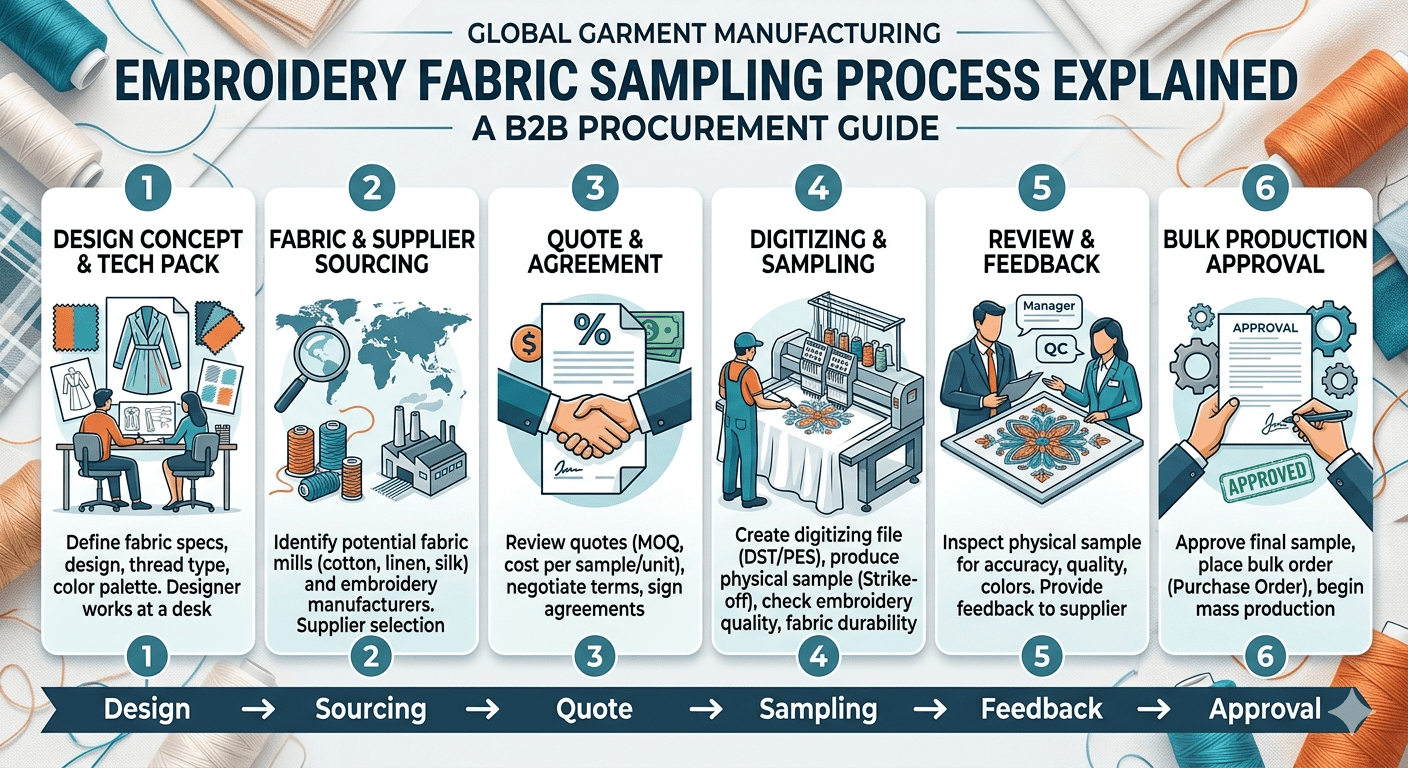
Developing a bespoke textile architecture requires precise alignment between the buyer’s creative team and the factory’s technical staff. When ordering custom embroidery fabric, the engineering process follows an exact protocol to eliminate errors before scaling production:
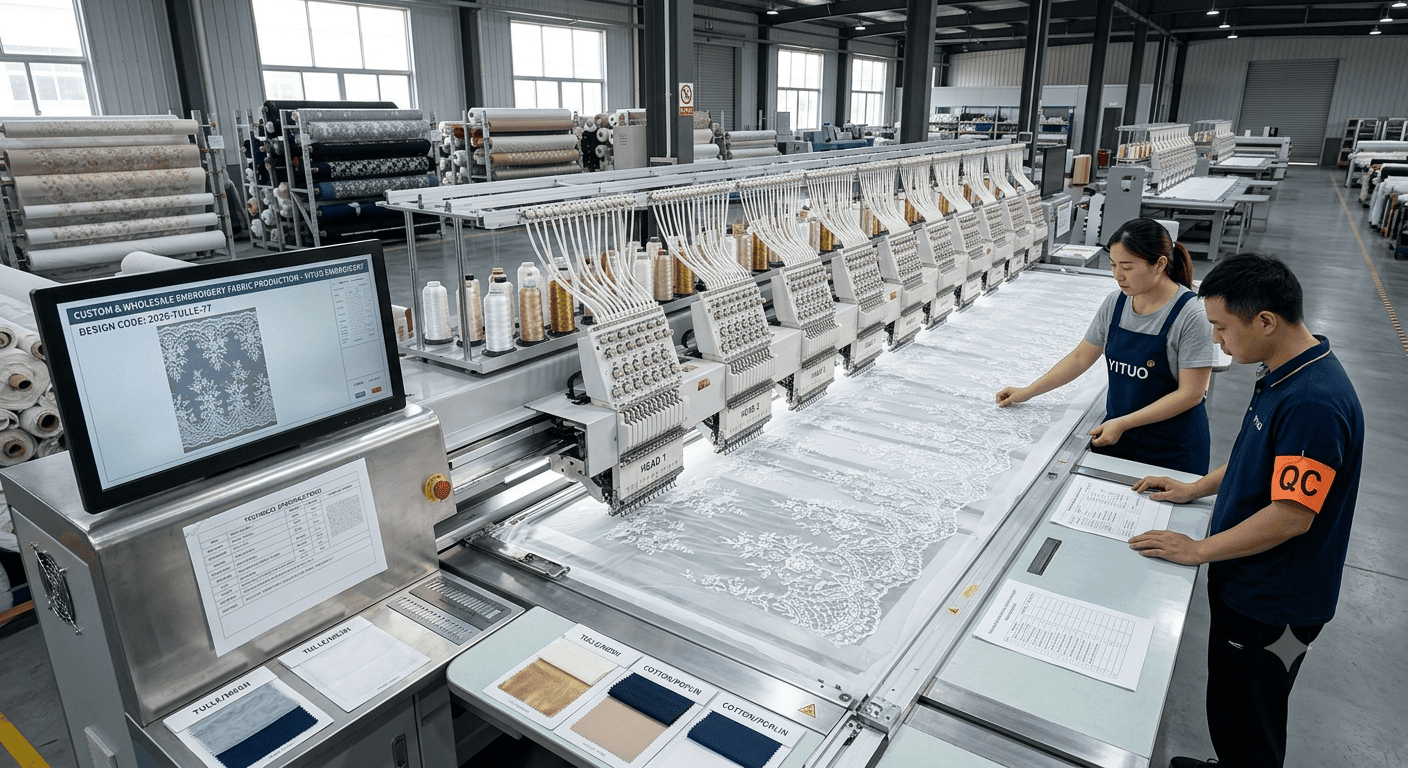
- Technical Pattern Ingest & Digitizing: Design files (vector or high-res imagery) are translated into industrial embroidery formats (.DST or .EXP). Digitizers calculate stitch paths, velocity, and jump codes to match the physical traits of the target substrate.
- Substrate Selection and Tension Calibration: The base material (mesh, organza, cotton, or water-soluble backing) is secured onto the sampling loom. Machine technicians adjust tension vectors based on the embroidery thread composition to prevent fabric deformation.
- Executing the First Strike-Off: A physical prototype is run on dedicated single-head or specialized prototyping machinery. This allows real-time modifications without disrupting commercial manufacturing queues.
- Post-Process Refining and Post-Curing: The prototype undergoes required finishing steps, such as chemical washing, heat-setting, laser cutting, or manual bead application, ensuring the sample reflects the exact aesthetic properties of final production.
4. 2026 Technical Innovation Trends in Sampling
The year 2026 marks a structural shift in advanced fabric manufacturing. High-efficiency production lines are incorporating new materials and processes to satisfy global regulatory changes and modern design demands. Sourcing from an advanced embroidery fabric manufacturer provides direct access to these key industry shifts:
- Hyper-Dimensional 3D Sculpting: Prototyping multi-layered, structural foam-injected or pleated applique elements. This technique creates architectural relief effects suitable for premium haute-couture and evening wear segments without adding excessive weight.
- Eco-Certified and Traceable Bases: Sampling now utilizes certified organic cotton bases alongside Global Recycled Standard (GRS) polyester threads. Prototyping labs must optimize thread processing to handle the specific tensile traits of recycled polymers.
- Liquid-Metal Finishes: Replacing traditional rigid metallic threads with ultra-fine, flexible coated foils. These materials deliver a high-shine, reflective appearance while retaining a soft hand-feel that passes strict skin-contact tests.
5. B2B Quality Inspection Standards for Counter-Samples
To ensure reliable evaluation, procurement QA teams should assess received embroidery fabric prototypes using a rigorous, data-driven inspection framework:
A. Pattern Continuity and Dimensional Stability
Measure the sample before and after standard laundering. Check for fabric puckering or structural shifting along dense stitch clusters, confirming pattern alignment remains accurate across the full pattern repeat.
B. Color Matching Precision (Delta-E Tracking)
Analyze thread color parameters using spectrophotometers under standardized D65 lighting. The target tolerance should register a Delta-E value below 1.0 to ensure consistent appearance in subsequent wholesale embroidery fabrics shipments.
C. Backing Integrity and Finishing Residue Controls
Examine the back of the sample for uncut jump threads or loose knots. Chemical water-soluble stabilizers must be completely processed out, ensuring no stiff chemical residues or structural brittleness remain.
6. Maintenance and Preservation of Master Samples
Approved master prototypes function as legal and operational references for bulk production runs. Protecting these assets from physical wear and degradation is vital for ongoing quality assurance:
- Environmental Controls: Store samples in a dark, climate-controlled space with relative humidity kept under 45% to prevent yellowing of raw yarns or oxidation of delicate metallic elements.
- Proper Placement Architecture: Store large or heavily embellished panels flat inside acid-free archival storage containers. Hanging heavy samples can distort fabric drape and alter the original pattern dimensions over time.
- Contamination Defenses: Keep prototypes sealed inside neutral polypropylene covers to protect against environmental particulates, dust, and moisture handling during routine audits.
7. Frequently Asked Questions (FAQs)
Q1: Why do embroidery strike-offs sometimes show slight color differences compared to the approved color standard?
Slight variations can emerge due to differences in dye lots or because embroidery threads absorb light differently than flat base materials. To manage this, our production facility uses computerized color spectrophotometers to maintain variance metrics below strict trade-accepted limits.
Q2: What options are available to reduce lead times for custom embroidery fabric prototyping?
Providing complete vector artwork files (.AI or .DXF) with clear color standards (such as Pantone codes) accelerates development. Our pre-aligned thread inventories and agile prototyping looms can reduce standard strike-off production times significantly.
Q3: How does the factory handle structural changes if a prototype shows fabric puckering?
Our engineering team resolves puckering issues by adjusting stitch density parameters in the digital pattern file, shifting embroidery direction vectors, or introducing stronger backing stabilizers to keep the material flat and stable throughout processing.