
Discover professional bulk order solutions for custom embroidery fabric sourcing, quality control, production scalability, and the latest embroidery textile trends for global fashion brands and wholesalers in 2026.
What Is Custom Embroidery Fabric?
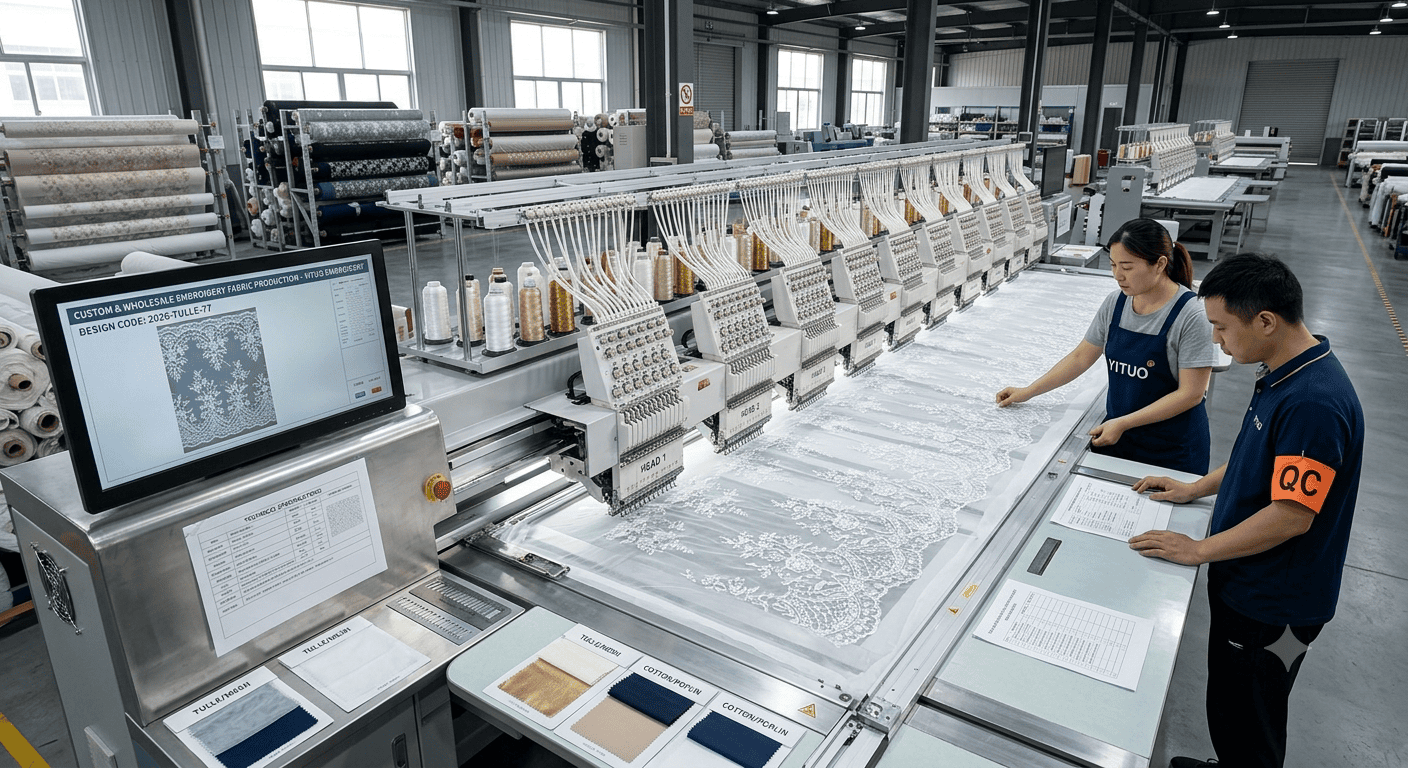
Custom embroidery fabric refers to textile materials enhanced with decorative stitched patterns, floral motifs, sequins, beadwork, or lace embroidery that are specifically designed for fashion brands, garment factories, bridalwear manufacturers, and textile distributors. Unlike standard printed textiles, embroidery fabrics provide a three-dimensional luxury appearance that significantly elevates garment value.
Today’s fashion industry increasingly relies on premium
Embroidery Fabric
solutions for bridal gowns, evening dresses, haute couture collections, lingerie, children’s apparel, and luxury fashion accessories.
Working with experienced
Embroidery Fabric Manufacturer Services
helps brands ensure stable production capacity, strict quality management, and efficient bulk manufacturing support for large-scale fashion projects.
For B2B buyers, sourcing custom embroidery fabric involves evaluating embroidery density, thread quality, base fabric durability, and production scalability for international wholesale markets.
Bulk Order Applications for Embroidery Fabrics
Bulk embroidery fabrics are widely used across multiple fashion and textile sectors:
- Bridalwear Manufacturing: Floral embroidered tulles and lace mesh fabrics for luxury wedding gowns.
- Evening Dresses: Sequined embroidery fabrics for premium red carpet and formalwear collections.
- Fashion Brands: Exclusive runway embroidery designs for seasonal apparel launches.
- Home Textiles: Decorative embroidered fabrics for curtains, table runners, and upholstery accents.
- Children’s Fashion: Soft lightweight embroidery fabrics for girls’ dresses and boutique collections.
Many global buyers cooperate with reliable
Wholesale Embroidery Fabric Supplier
partners to reduce sourcing risks while maintaining stable quality and delivery schedules for international orders.
Technical Comparison Table
Professional Quality Inspection Standards
Professional quality inspection is essential for bulk embroidery fabric sourcing. International garment brands and distributors commonly apply the following inspection standards:
- Thread Density Testing: Verify embroidery consistency and stitch accuracy.
- Color Fastness: Ensure embroidery threads resist fading during washing and steaming.
- Fabric Shrinkage Testing: Confirm dimensional stability after processing.
- Backing Durability: Inspect the stability of mesh, tulle, or organza bases.
- Sequin & Bead Security: Evaluate attachment strength for luxury embroidery fabrics.
- Roll-to-Roll Consistency: Maintain identical embroidery spacing and color across bulk orders.
Professional suppliers of
Wholesale Embroidery Fabric
should always provide pre-production samples, QC inspection reports, and bulk production confirmation before shipment.
2026 Embroidery Fabric Industry Trends
The embroidery textile market is rapidly evolving with technology-driven innovation and sustainability initiatives. Key trends in 2026 include:
- 3D Embroidery: Raised floral embroidery and layered appliqué designs dominate bridal and couture markets.
- Sustainable Materials: Recycled polyester mesh and biodegradable embroidery threads gain popularity among eco-conscious brands.
- Metallic Embroidery: Gold and silver thread embroidery creates premium luxury aesthetics.
- Laser-Cut Embroidery: Precision cutting technology improves detailing and production efficiency.
- Digital Embroidery Design: CAD embroidery systems allow faster sampling and personalized design development.
Global fashion brands increasingly prioritize manufacturers capable of delivering scalable custom embroidery fabric production with stable lead times and flexible MOQ solutions.
Fabric Care & Maintenance Recommendations
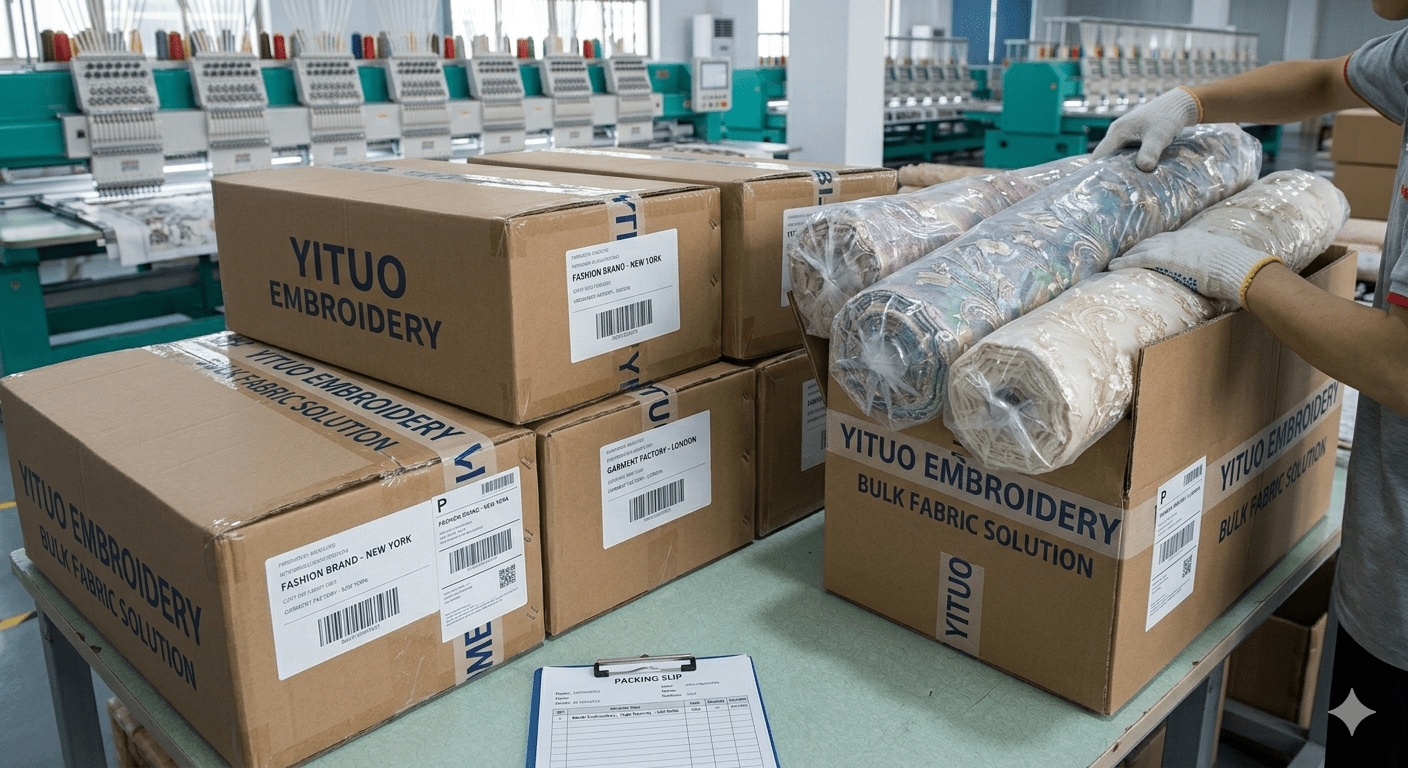
Proper storage and maintenance are essential for preserving embroidery quality during transportation and garment manufacturing.
- Store embroidery fabrics in low-humidity environments to prevent discoloration.
- Avoid excessive compression during warehousing and shipping.
- Use protective wrapping for sequined and beaded embroidery fabrics.
- Conduct steam testing before cutting and sewing operations.
- Protect light-colored embroidery fabrics from prolonged UV exposure.
FAQ for B2B Buyers
1. What is the typical MOQ for custom embroidery fabric?
MOQ varies depending on embroidery complexity, fabric type, and customization requirements. Standard embroidery fabrics usually start from 100-300 yards.
2. How long does bulk embroidery fabric production take?
Sampling generally takes 5-10 days, while bulk production may require 15-30 days depending on order size and embroidery complexity.
3. Can embroidery fabrics be customized with exclusive patterns?
Yes. Professional manufacturers can develop custom embroidery layouts, thread colors, sequins, and exclusive floral motifs according to brand requirements.
4. How do buyers ensure embroidery quality consistency?
Buyers should request pre-production samples, QC inspection reports, and dye-lot confirmations before approving mass production.
Partner with Yituo for Professional Embroidery Fabric Solutions
Yituo provides factory-direct embroidery fabric manufacturing with stable production capacity, custom embroidery development, strict quality control, and fast global shipping support. Whether you need bridal embroidery fabrics, luxury couture textiles, or scalable bulk production, our experienced team is ready to support your next collection.