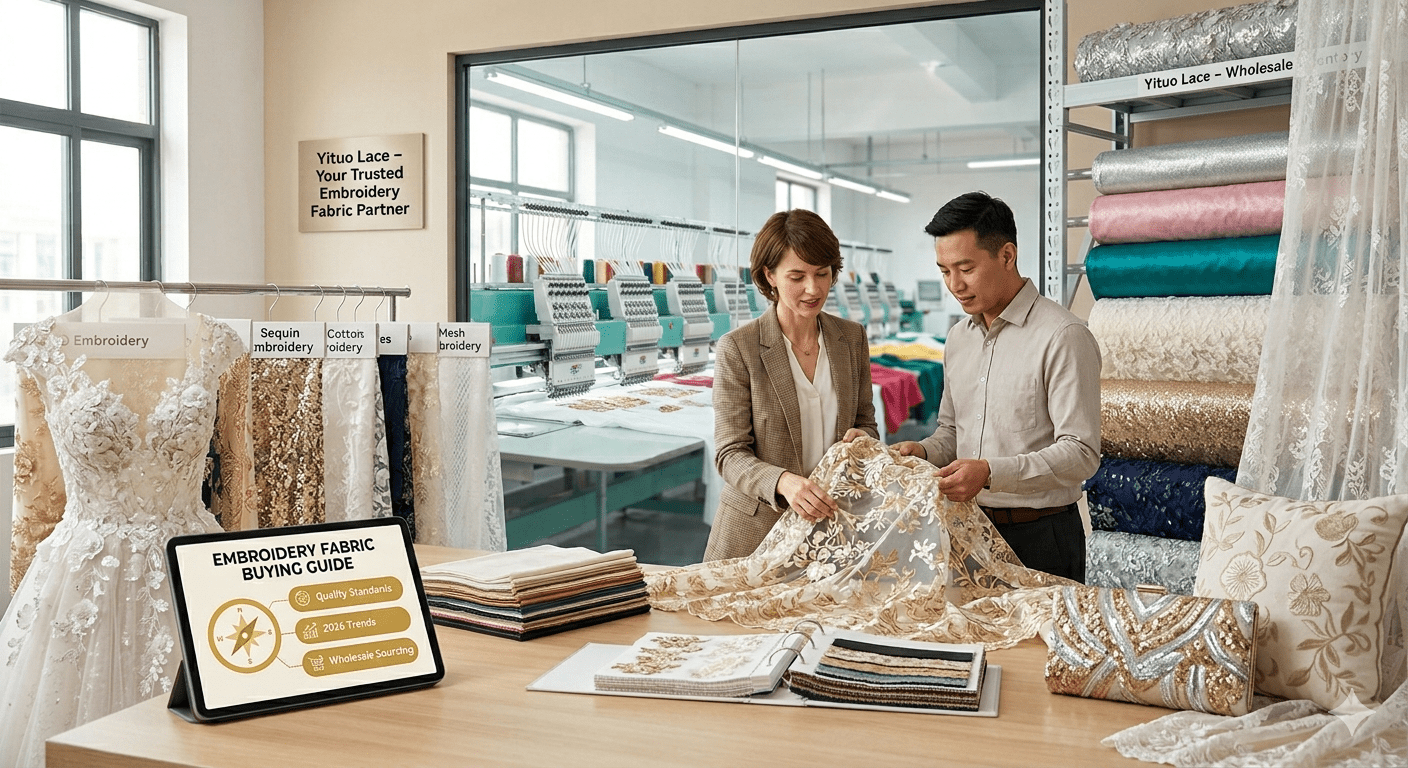

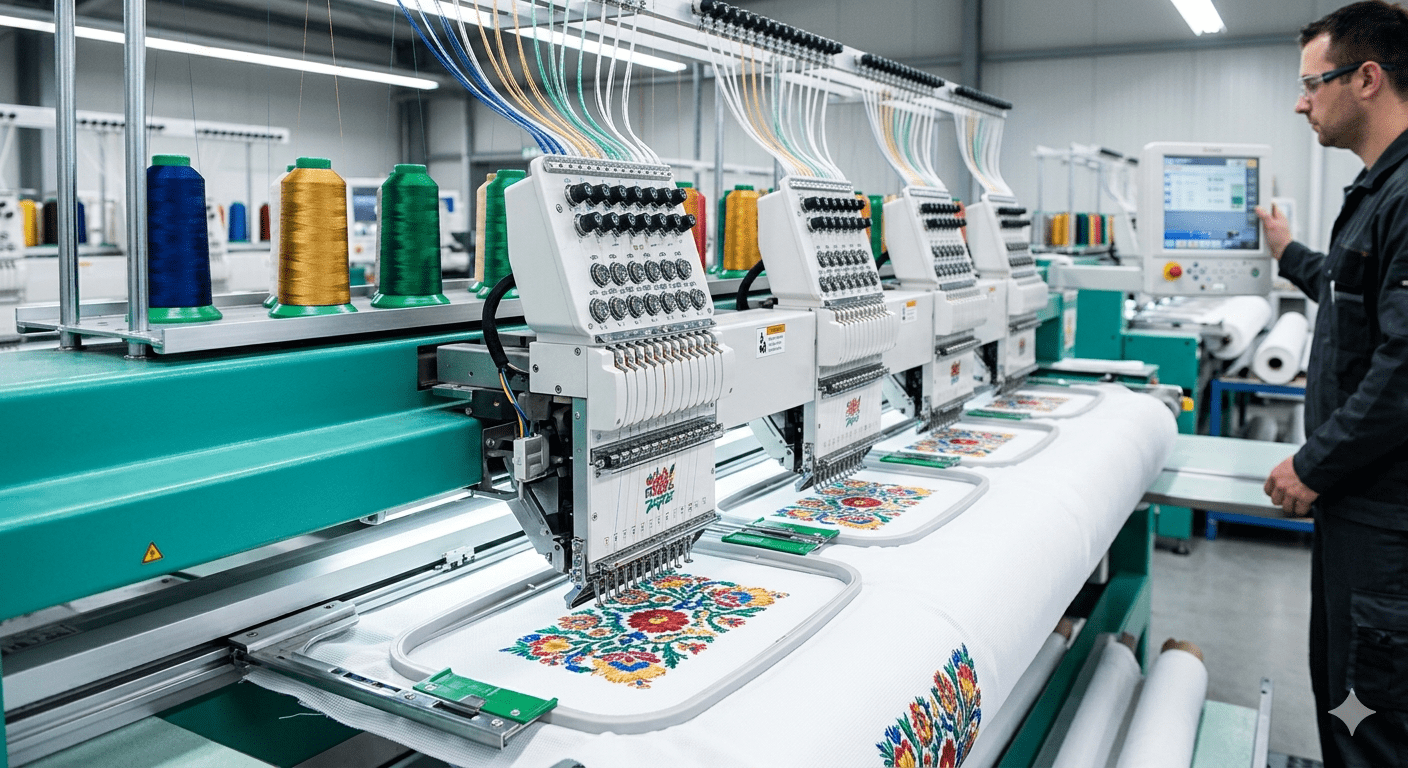
Industrial multi-head machines execute high-precision stitching to ensure consistency for wholesale embroidery fabric orders.
What is Embroidery Fabric?
Embroidery fabric is a decorative textile created by stitching patterns onto a base material using advanced embroidery techniques. It is widely used in fashion, bridalwear, upholstery, and luxury garments. High-quality
embroidery fabric combines durability with intricate design, making it a preferred choice for premium textile applications.
Many buyers ask: how is embroidery fabric produced in bulk? Understanding the embroidery fabric production process helps B2B buyers evaluate supplier capabilities and product quality before placing orders.
Embroidery Fabric Production Process (Step-by-Step)
1. Base Fabric Selection
The production process begins with selecting the base fabric, such as cotton, polyester, mesh, organza, or lace. The choice affects breathability, strength, and final appearance.
2. Design Digitization
Designs are converted into digital embroidery files using CAD software. This step defines stitch type, density, and sequencing, which are critical to embroidery fabric production quality.
3. Embroidery Machine Process
Industrial multi-head machines execute the embroidery with precision. This stage determines efficiency and consistency, especially for large-scale
wholesale embroidery fabrics.
4. Finishing and Treatment
After stitching, fabrics undergo washing, heat setting, trimming, and optional treatments such as anti-wrinkle or softening finishes to enhance usability and appearance.
Technical Specifications of Embroidery Fabric
| Parameter | Typical Range | Impact |
|---|---|---|
| Fabric GSM | 80–250 GSM | Determines weight and durability |
| Stitch Density | 0.3–0.6 mm | Affects design sharpness |
| Thread Type | Polyester / Rayon / Metallic | Defines shine and strength |
| Colorfastness | Grade 3–5 | Prevents fading |
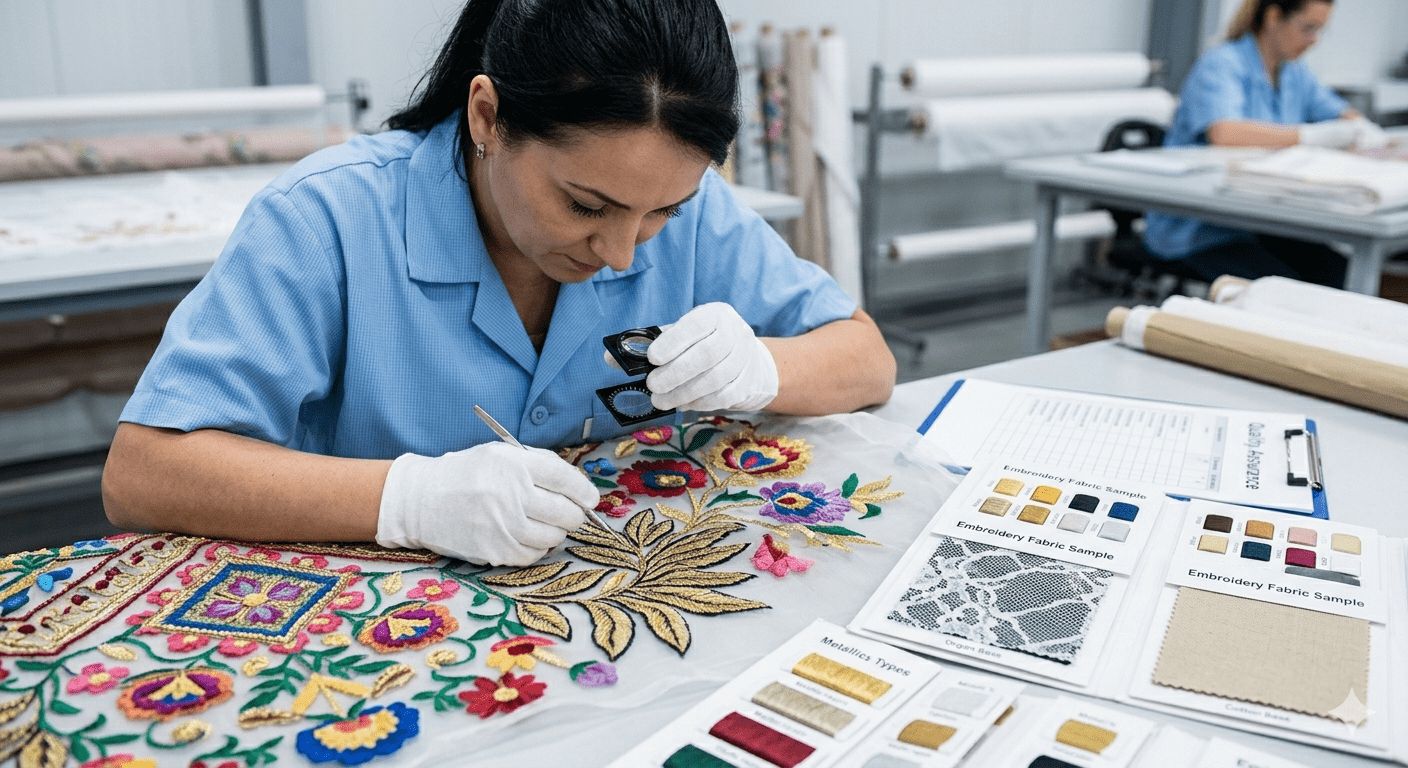
Embroidery Fabric Quality Assurance and Sample Testing
How Manufacturers Ensure Quality
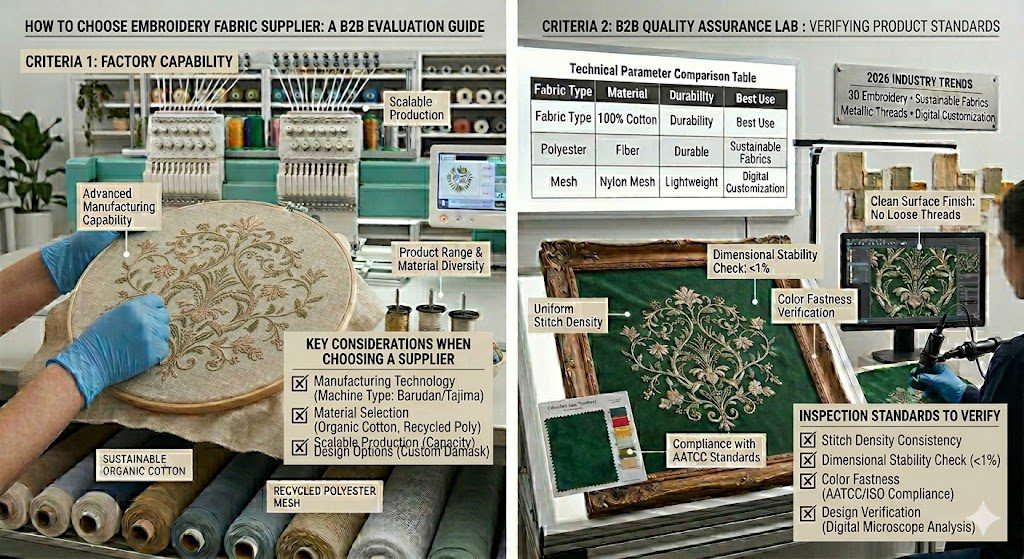
- Consistent stitch alignment with no skipped threads
- Accurate pattern execution within tolerance levels
- No fabric distortion or puckering
- Batch color consistency for large orders
- Compliance with international textile standards
Partnering with a reliable
embroidery fabric manufacturer ensures consistent quality, especially for export markets and bulk production.
How to Choose the Right Embroidery Fabric Supplier
Selecting the right embroidery fabric supplier is crucial for long-term business success. Key factors include:
- Minimum Order Quantity (MOQ)
- Production lead time (typically 15–30 days)
- Customization capabilities
- Sampling support and communication efficiency
One common question is whether Free Embroidery Fabric Samples are available. Most professional suppliers provide samples so buyers can evaluate quality before committing to bulk orders.
2026 Trends in Embroidery Fabric Industry
- 3D Embroidery: Raised textures for luxury garments
- Sustainable Materials: Organic and recycled fibers
- Metallic Effects: Growing demand in premium fashion
- Digital Customization: Faster sampling and design iteration
To keep up with these trends, buyers increasingly request Free Embroidery Fabric Samples to test innovation and quality before scaling production.
FAQ
What is embroidery fabric made of?
It is typically made from cotton, polyester, mesh, or lace bases combined with decorative threads such as rayon or metallic yarns.
How long does embroidery fabric production take?
Standard production lead time ranges from 15 to 30 days depending on complexity and volume.
Can I get Free Embroidery Fabric Samples?
Yes, most suppliers offer Free Embroidery Fabric Samples to help buyers assess quality before bulk purchasing.
What is the MOQ for embroidery fabric?
MOQ usually ranges from 300 to 1000 meters, depending on customization requirements.
Get Free Embroidery Fabric Samples Direct from Manufacturer
Work with Yituo Lace for factory-direct pricing, full customization, and fast global delivery.
Enjoy low MOQ, quick sampling (3–7 days), and expert support.