Custom Ethnic & Middle Eastern Lace Manufacturer | Fast Sampling
Unlocking Cultural Elegance: Premium Custom Ethnic Lace & Middle Eastern Trims from a Direct Manufacturer…


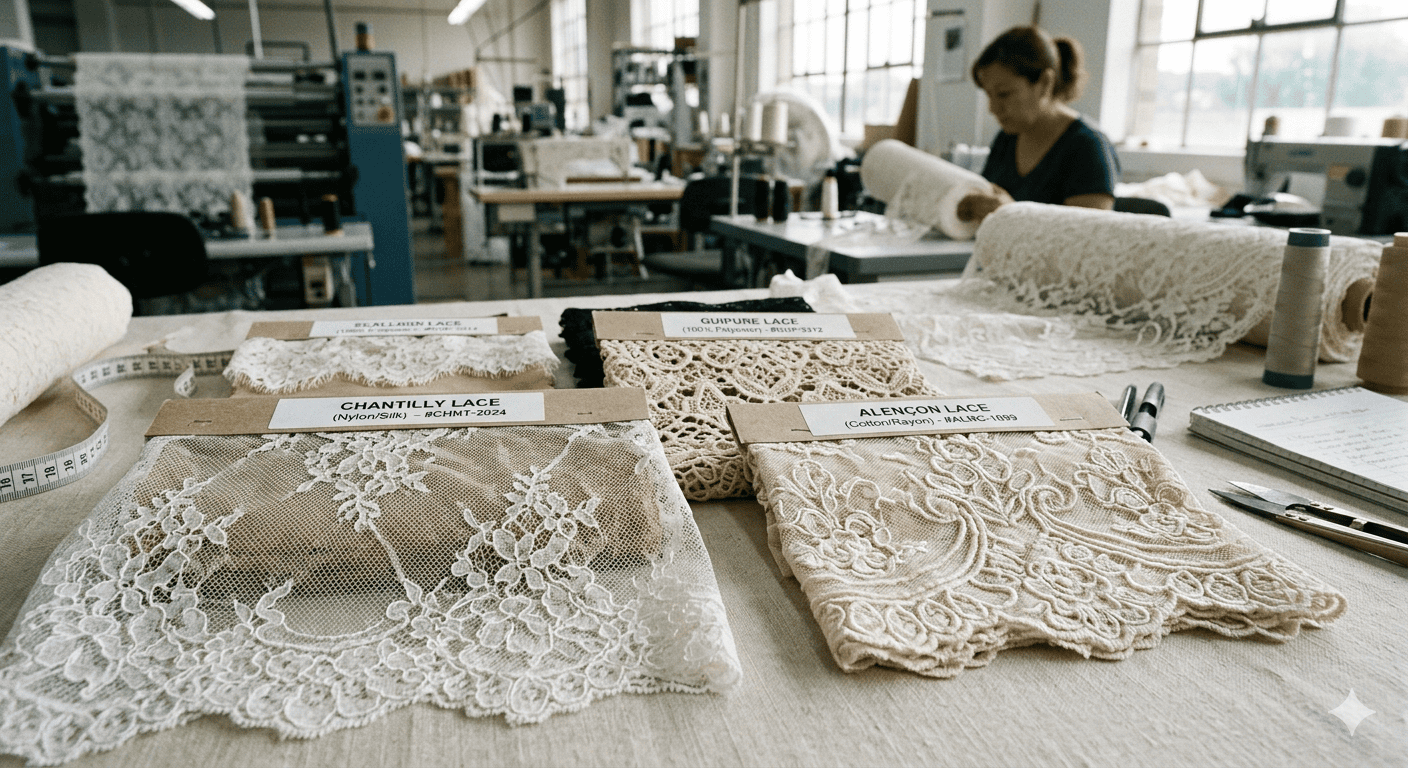
Executive Procurement Note: Customizing embroidered fabrics requires strict coordination between the embroidery pattern design (stitch count, stitch length) and the physical properties of the base substrate to prevent puckering, structural deformation, and thread breakage during high-speed sewing runs.
The choice of ground fabric dictates the weight, drape, transparency, and downstream utility of the final custom embroidered piece. Industrial embroidery can be executed on nearly any textile substrate, but commercial production is concentrated across three core categories:
Highly favored in bridal wear, evening couture, and intimate apparel. Nylon or polyester mesh serves as an ultra-lightweight, translucent matrix for global Embroidery Fabric demands. Polyester mesh offers superior tensile strength and colorfastness under high-temperature dye baths, while nylon mesh provides an exceptionally soft hand-feel against the skin. The stability of the mesh grid is critical to preventing the embroidery stitches from pulling the ground fabric out of alignment.
Utilizing premium cotton lawn, poplin, or voile as the base material. This substrate is synonymous with summer apparel and resort wear collections. In cotton eyelet embroidery fabric production, the base woven cotton is physically perforated or punched by the machinery, and the raw edges are immediately bound by dense embroidery satin stitches, ensuring a breathable, textured, and highly durable product.
When the design brief requires free-standing embroidered lace—such as Guipure or chemical lace inserts—the pattern is stitched onto a specialized polyvinyl alcohol (PVA) water-soluble film or a heat-disintegrating non-woven backing. Post-embroidery, the entire roll undergoes an industrial chemical wash, completely dissolving the substrate and leaving behind only the interconnected embroidery motifs.
The visual depth, luster, and structural longevity of the embroidered motif depend heavily on the physical properties of the embroidery yarn. Industrial suppliers categorize threads based on fiber composition and ply configurations:
To scale custom embroidery fabric economically, manufacturers utilize two distinct mechanical configurations based on the desired output volume and repeat pattern layout:
Schiffli machines are massive, continuous industrial setups spanning up to 15 yards in length, deploying thousands of horizontally aligned needles working simultaneously. The fabric moves vertically on a massive frame while the needles and shuttles lock threads in unison. Schiffli production is the definitive choice for continuous, repeating all-over fabric yardage, borders, and high-volume cotton eyelet production. It maximizes output speed and drastically lowers per-meter fabrication costs on mass orders.
Multi-head configurations utilize discrete, independently controlled embroidery heads (ranging from 1 to 30+ heads per machine) operating over a flat bed or framing table. Sourcing dynamic Wholesale Embroidery Fabric through these systems allows for high-precision placement motifs, multi-colored designs utilizing up to 12 distinct thread changes, and highly complex fabric developments with localized variations.
The following technical reference matrix assists apparel engineering and sourcing teams in aligning custom embroidery variables with specific product category applications:
| Product Type | Optimal Base Fabric | Recommended Thread | Machinery Used | Key Property Focus |
|---|---|---|---|---|
| All-Over Mesh Embroidery | Polyester / Nylon Mesh | Trilobal Poly / Rayon | Schiffli / Multi-Head | Sheer transparency, fluid drape |
| Broderie Anglaise / Eyelet | 100% Cotton Lawn | Spun Cotton Thread | Schiffli (with punch) | Matte finish, skin breathability |
| Guipure / Chemical Lace | Water-Soluble PVA Film | High-Tenacity Polyester | Schiffli Machine | Free-standing structural grid |
| Placement Motif Panels | Organza, Satin, Velvet | Rayon, Metallic Blends | Multi-Head Machine | High-definition multi-color detail |
Bulk production of custom embroidery fabric presents unique quality management challenges. Utilizing professional Embroidery Fabric Manufacturer Services helps ensure that your raw goods undergo proper structural analysis. A rigorous inspection routine must cover the following four industrial quality control parameters:
Puckering occurs when the embroidery stitches are applied under excessive tension relative to the stability of the ground substrate, causing the base fabric to bunch up around the pattern contours. This defect prevents the fabric from laying flat on automated garment cutting tables, leading to major dimensional errors during garment assembly. Ensure the factory utilizes proper non-woven stabilizers or water-soluble backings during production to preserve fabric flatness.
High-speed manufacturing can lead to broken needles or filament separation. Inspection teams must check the surface under a light grid for skipped lock-stitches or loose yarn loops that could unwrap during wear. Additionally, verify that the rear side of the fabric features clean, trimmed bobbin thread transitions rather than dense, chaotic thread knots that could cause friction and skin discomfort.
For all-over continuous embroidery fabric, the precise measurement of the pattern repeat (the physical interval before the motif duplicates) must be tightly controlled within a ±1% variance. Any drift in repeat intervals across sequential fabric rolls will result in mismatched seams on the garment factory floor, drastically increasing fabric cutting waste.
Navigating commercial procurement constraints requires proactive collaboration with your textile supplier regarding technical capabilities and chemical safety certifications:
As an established B2B innovator in specialized textile components, Shaoxing Yituo Clothing Accessories Co., Ltd. delivers advanced technical expertise in industrial embroidery fabrication. We provide end-to-end custom CAD pattern translation, precision DTM color matching, and rigorous QC protocols optimized for global apparel scale.
Partnering with an experienced Wholesale Embroidery Fabric Supplier ensures full compliance with international testing regimes and streamlined shipping protocols.