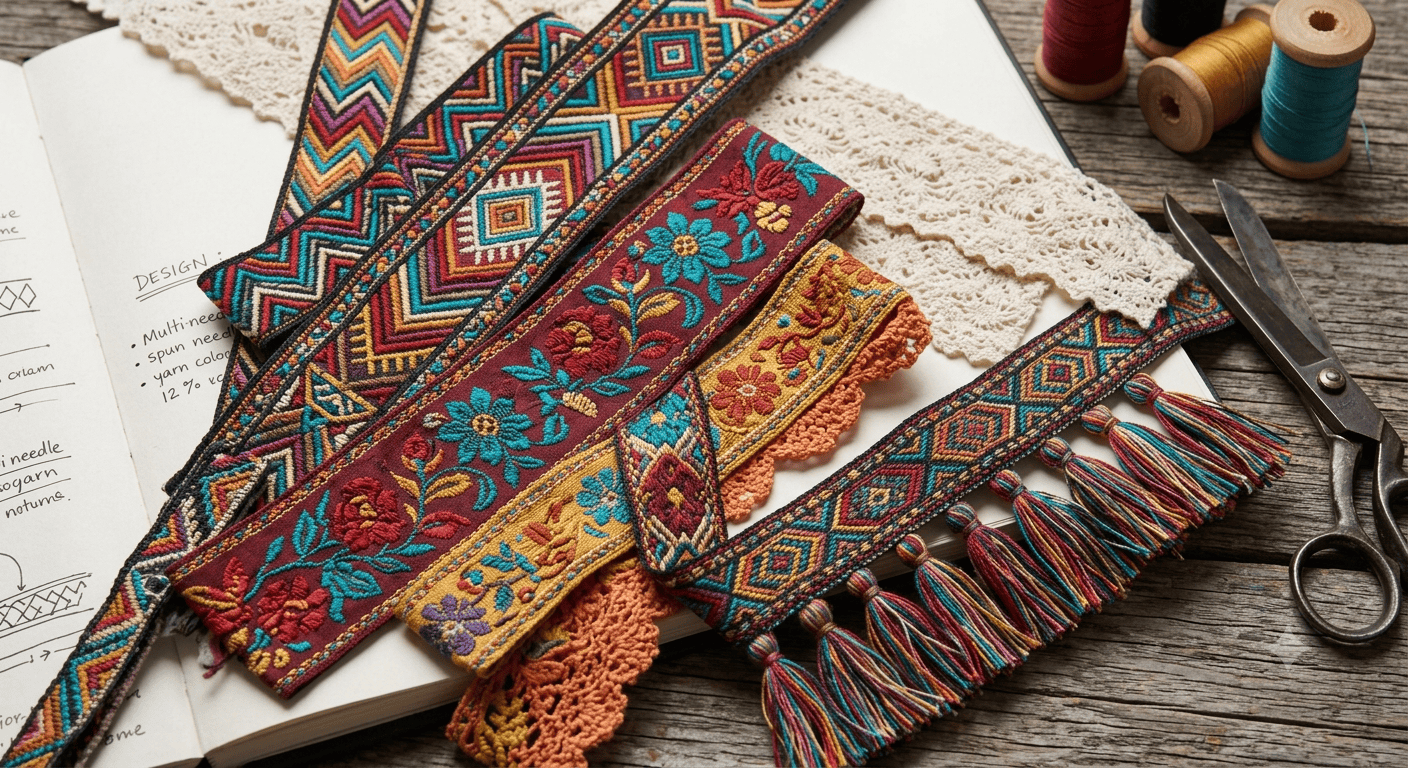
Home > single Blog

Single Blog Post

Embroidered Lace Fabric Guide: B2B Sourcing & Custom Production

In the highly competitive landscape of global apparel manufacturing, embroidered lace fabric is undeniably one of the most technically demanding textiles to source, engineer, and produce at scale. Unlike standard woven or knitted fabrics, lace represents a complex architectural construct of interlacing yarns, requiring absolute precision in mechanical calibration, chemical finishing, and digital design. For Procurement Managers, Apparel Factory Heads, and Textile Product Developers, moving beyond aesthetic appreciation into the realm of technical specification is mandatory for ensuring garment quality and supply chain profitability. This comprehensive encyclopedic guide, engineered by the production experts at Shaoxing Yituo Clothing Accessories Co., Ltd., dissects every facet of lace production, from raw polymer extrusion to international logistics.
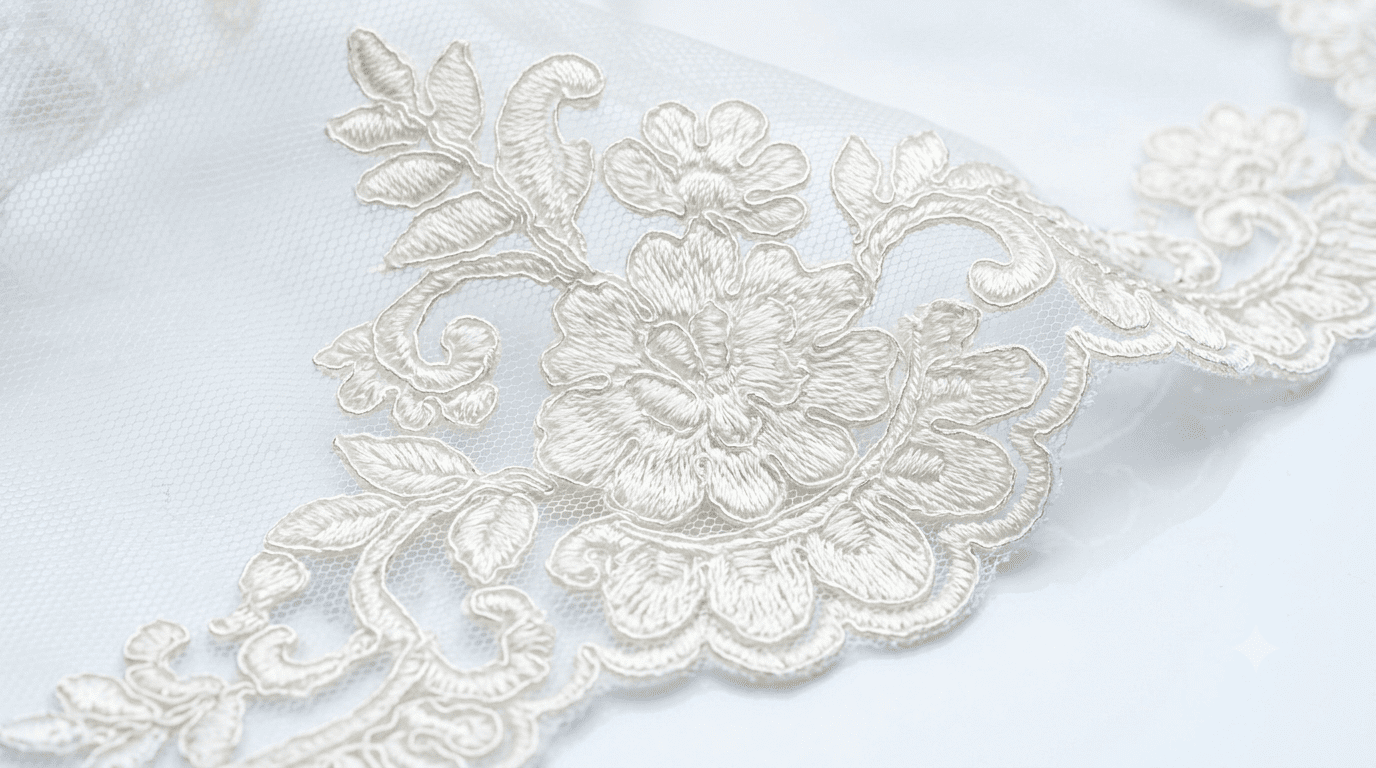
Executive Procurement Note: When managing bulk orders of high-end textiles, high-level procurement must audit the “stitch-density-to-substrate-weight” ratio. Excessive thread tension on a lightweight tulle base will inevitably cause puckering (dimensional instability) during steam pressing at the garment factory. Furthermore, global supply chain executives should strictly define acceptable variance in Dye-to-Match (DTM) processing under D65 illuminants and establish clear Incoterms (such as FOB or CIF) to mitigate logistical friction during cross-border transit.

1. Comprehensive Taxonomy & Structural Classification

Source premium embroidered lace fabric efficiently. This B2B guide covers custom manufacturing processes, quality control, and supply chain optimization.

The term embroidery fabric serves as an umbrella category encompassing a vast array of specialized construction methods. To optimize material utilization and cost-engineering, procurement teams must precisely identify the sub-category required for their specific garment silhouette. Here is the definitive classification of industrial lace:
1.1 Base-Supported Embroidery

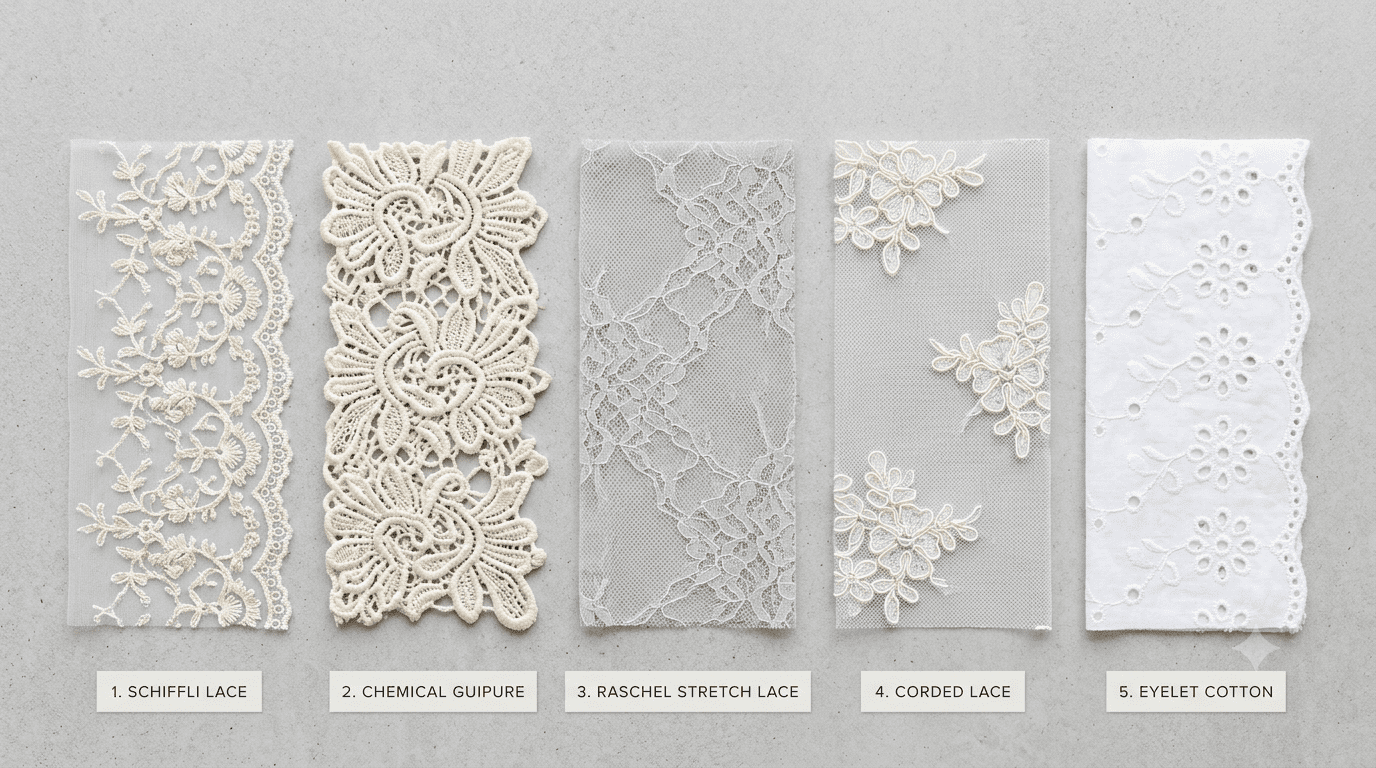
  • Embroidered Tulle / Net Lace: The most ubiquitous form in eveningwear. It consists of a fine, hexagonal knit base (usually nylon for strength) onto which floral, geometric, or abstract motifs are stitched. The openness of the net determines the drape.
  • Alençon Lace (French Corded): Characterized by a distinctive raised outline called a “cordonnet” or “gimp” thread. This heavy thread is stitched over the primary embroidery, giving the motif a three-dimensional, architectural depth highly prized in bridal couture.
  • Chantilly & Eyelash Lace: Known for its exceptionally fine ground, abundant detail, and the characteristic “eyelash” fringing at the scalloped edges (galloon). Modern French Rose Eyelash Lace utilizes advanced Raschel knitting machines to replicate handmade bobbin lace at a commercial scale.
  • Appliqué Lace: A technique where separate pieces of fabric (often varying in texture, like satin or velvet) are stitched onto a mesh ground, often combined with heavy cording or beading.

1.2 Self-Supporting Embroidery

  • Chemical Lace (Guipure / Soluble Lace): Unlike tulle-based fabrics, Guipure is created by embroidering continuously on a sacrificial base (such as Polyvinyl Alcohol – PVA film or specially treated paper). Once production is complete, the fabric is immersed in high-temperature water or chemical solutions, dissolving the base and leaving only the interconnected, freestanding embroidery thread.
  • Macramé Lace: Historically knotted by hand, modern industrial macramé uses heavy-gauge yarns to create substantial, highly textured fabrics suitable for outerwear detailing and heavy dresses.

1.3 Knitted & High-Performance Lace

  • Floral Jacquard Stretch Lace (Raschel): Produced on warp-knitting machines equipped with jacquard mechanisms. By incorporating elastane (Spandex/Lycra) alongside nylon yarns, this fabric achieves 4-way or 2-way stretch. It is the non-negotiable standard for intimate apparel, lingerie, and form-fitting athleisure detailing.
  • Textronic / Jacquardtronic Lace: Highly advanced knitted laces that simulate the “corded” look of Alençon but are entirely knitted rather than embroidered post-production.

1.4 Traditional Cutwork

  • Eyelet (Broderie Anglaise): A technique typically executed on woven cotton or linen bases. The machine embroiders a border and a mechanical punch or laser cuts the center away, creating structured, breathable summer apparel components.
  • Venise Lace: Similar to Guipure but often heavier, featuring pronounced, dense stitching with fewer connecting bars (brides).

1.5 Edge & Trim Specifications

  • Galloon Lace: A continuous band of lace featuring scalloped (decorative) edges on both the top and bottom. Used extensively in hems and lingerie edges to eliminate the need for folded seams.
  • Flounce Lace: A trim with one straight edge (for sewing into a seam) and one deeply scalloped edge, designed to drape and cascade.
  • Allover Lace (Yardage): Fabric manufactured in wide widths (typically 50-60 inches) with a repeating pattern that has no specific edge boundaries, used for cutting large pattern pieces like bodice fronts and skirts.

2. Advanced Fiber Science & Yarn Formulations

embroidered lace fabric samples

The structural integrity and commercial viability of wholesale embroidery fabric are entirely dependent on yarn chemistry. Procurement managers must dictate the correct Denier (D) or Decitex (dtex) to ensure the fabric meets washing, wearing, and tearing strength requirements.
2.1 Synthetic Polymers

  • Polyamide (Nylon): The undisputed champion for lace base nets. Nylon exhibits exceptional tensile strength, elasticity, and resistance to abrasion. It recovers beautifully from stretching, preventing the “bagging” effect in garments.
  • Polyester (PES): Preferred for the actual embroidery threads. High-tenacity polyester offers unparalleled colorfastness, resistance to UV degradation, and is less prone to shrinkage than natural fibers. It is also highly responsive to disperse dyes during high-temperature pressure dyeing.
  • Elastane (Spandex): A polyurethane-polyurea copolymer critical for stretch laces. Even a 5-10% inclusion transforms rigid mesh into dynamic, body-contouring fabric.

2.2 Cellulosic & Natural Fibers

  • Viscose / Rayon: A semi-synthetic fiber derived from wood pulp. Rayon threads possess a high-luster, silk-like sheen and an exceptionally soft hand-feel. While it produces stunning visual results for high-end fashion, it has lower wet strength compared to polyester and requires careful laundering protocols.
  • Cotton: Utilized primarily in Eyelet and heavy Guipure laces. Cotton offers excellent breathability and a matte, natural aesthetic, highly sought after for premium summer collections.

3. Industrial Manufacturing & CAD Digitization

embroidered lace fabric

The transformation from a designer’s sketch to high-volume output requires an arsenal of industrial technology. When engaging an embroidery fabric manufacturer, it is crucial to understand their capability in the following phases:

3.1 CAD Digitizing (Punching)

Before a single needle moves, the design must be digitized. “Punching” is the highly skilled process of converting artwork into a stitch map. The digitizer determines stitch types (Satin stitches for borders, Fill stitches for petals, Running stitches for delicate veins), stitch density, and pathing. Poor digitizing leads to thread breaks, excessive machine downtime, and distorted fabrics. Precision pathing minimizes “jump stitches,” reducing the need for costly manual trimming later.

3.2 Schiffli & Multi-Head Embroidery

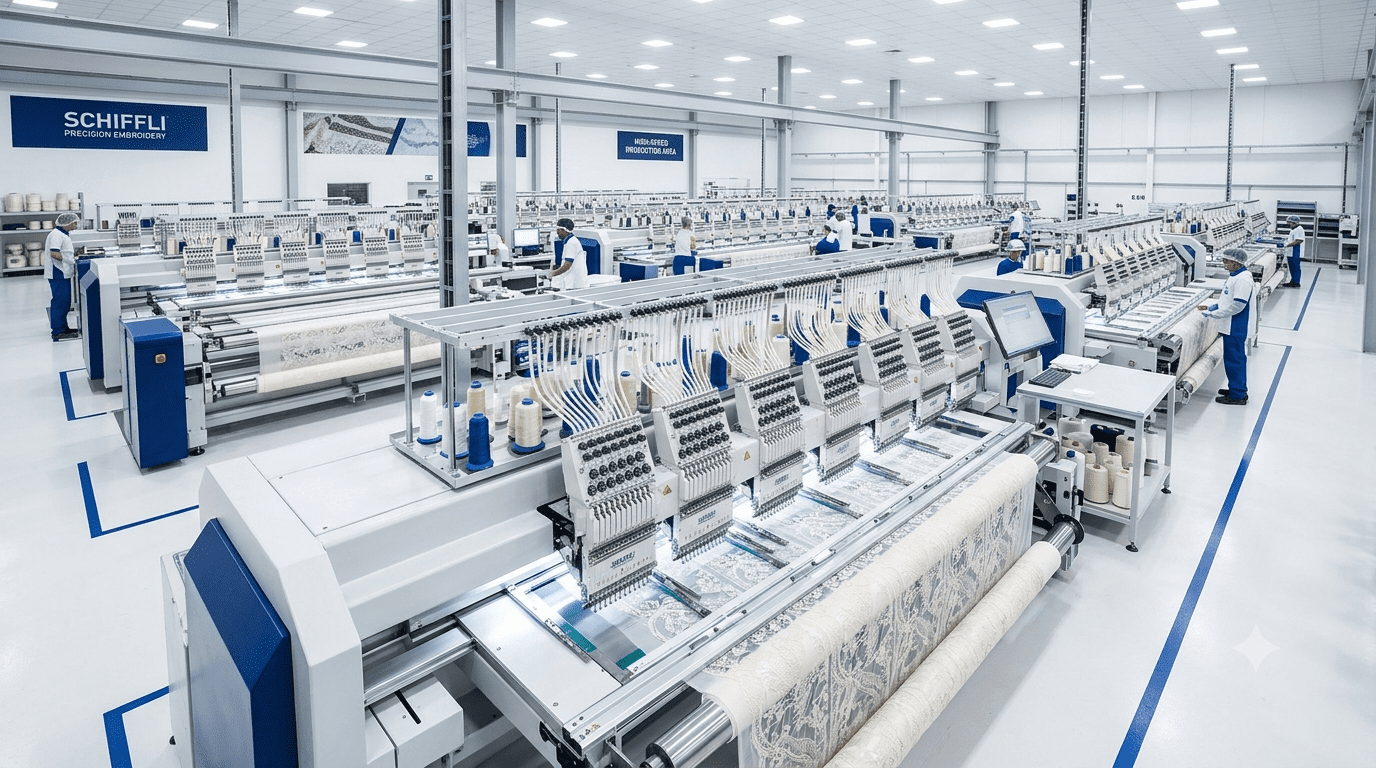
Industrial lace is predominantly produced on massive Schiffli machines, which can span up to 20 yards in length and operate thousands of needles simultaneously. These machines use a two-thread system (a front yarn and a bobbin yarn). Tension synchronization across the entire frame is paramount. If the tension on needle #1 differs from needle #500, the result is inconsistent motif sizing across the fabric roll.

3.3 Laser Integration

Modern production facilities integrate laser bridges over embroidery heads. This allows for instantaneous, highly precise cutwork (such as creating the holes in eyelet lace or cutting the scalloped edges of galloons) in the same pass as the embroidery, eliminating manual cutting errors and fraying.
4. DTM Dyeing & Chemical Finishing Protocols

embroidered lace fabric

A frequent pain point in garment manufacturing is dye inconsistency. B2B buyers must demand strict adherence to Dye-to-Match (DTM) protocols.

4.1 The Dyeing Process

Lace can be piece-dyed (the entire embroidered fabric is dyed at once) or yarn-dyed (threads are dyed before embroidery). When combining Nylon bases with Polyester threads, dyers utilize cross-dyeing techniques. Because these polymers absorb different classes of dye (Acid dyes for Nylon, Disperse dyes for Polyester), a single dye bath can create stunning two-tone “bicolor” effects simply by manipulating the chemical formula.

4.2 Stenter Finishing & Heat Setting

After dyeing, the fabric is passed through a stenter (tenter) frame. This machine applies high heat (often exceeding 180°C) while stretching the fabric to its desired width. This “heat sets” the synthetic fibers, permanently locking in the molecular structure to ensure the lace does not shrink or warp when the consumer washes the final garment.

5. Technical Parameter Comparison Matrix

embroidered lace fabric

To assist in your material selection, refer to this standardized technical matrix. It outlines the optimal configurations for B2B procurement based on end-use applications.

Lace Category Substrate Base Thread Core Critical Tolerance Primary Application
French Corded (Alençon) Fine Nylon Hex-Net Viscose/Rayon with Heavy Gimp Cordonnet Registration Bridal Couture, Haute Couture
Chemical (Guipure) Soluble PVA Washaway 100% High-Tenacity Polyester PVA Residue Elimination Premium Dresses, Collars, Overlays
Stretch Raschel Lace Nylon / Spandex Blend Polyester / Lycra Integrations Stretch Recovery Rate (%) Intimate Apparel, Lingerie
Eyelash Lace (Chantilly style) Ultra-fine Nylon Tulle Matte Nylon or Rayon Fringe (Eyelash) Integrity Luxury Sleepwear, Gowns
Eyelet (Broderie Anglaise) 100% Woven Cotton Mercerized Cotton Thread Cutwork Fraying Control Summer RTW, Childrenswear

6. B2B Quality Control (QC) & AQL 2.5 Standards

embroidered lace fabric

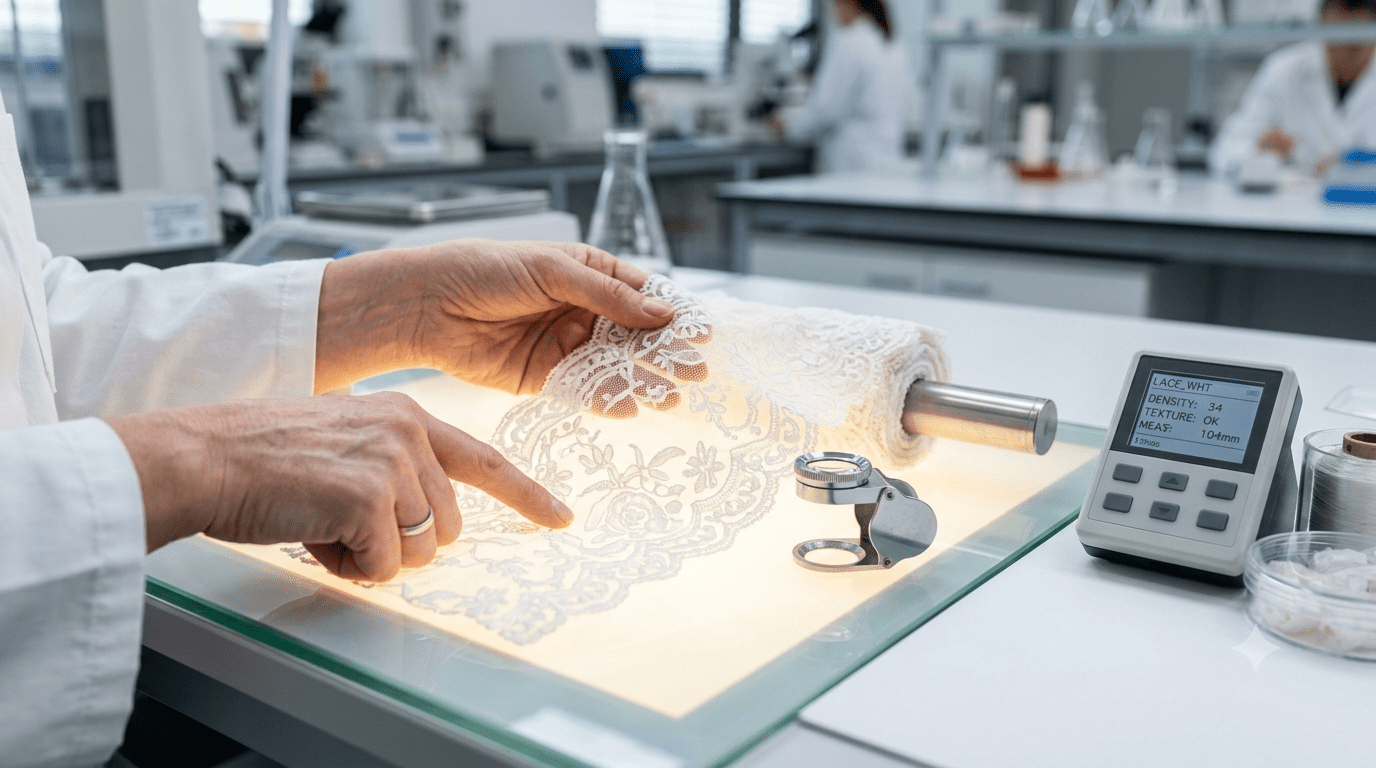
A reliable embroidery fabric supplier must not only manufacture but scientifically inspect goods before dispatch. In bulk supply, we adhere to the internationally recognized 4-Point System for visual textile inspection, generally aiming for an AQL (Acceptable Quality Limit) of 2.5 for premium fashion.

6.1 The 4-Point Grading System

Defects are penalized based on their size and severity. Fabric rolls exceeding a specified number of penalty points per 100 linear yards are rejected. For high-end lace, the tolerance is incredibly tight.

6.2 Critical Defect Glossary

  • Puckering / Dimensional Distortion: Caused by a severe mismatch between the embroidery thread tension and the base fabric’s structural limit. This renders the fabric un-cuttable for garment markers.
  • Motif Misregistration (Shifted Embroidery): Occurs when the machine frame shifts improperly during stitching, causing the fill stitches to bleed outside the satin border stitches.
  • Dropped Stitches / Needle Breakage: Missing elements in the pattern due to thread breaks that the operator failed to rewind and repair.
  • Color Shading (Side-to-Side / End-to-End): Uneven dye absorption where the selvage edge differs in hue from the center, measured using spectrophotometers and visual checks in light boxes (D65/TL84).
  • Bowing and Skewing: When the pattern does not sit exactly perpendicular or parallel to the selvage edges, causing severe headaches for garment pattern cutters.

7. Global Sourcing Optimization & Incoterms Management

Navigating the global trade environment requires logistical acumen. Sourcing managers must align production lead times with seasonal fashion calendars while managing customs complexities.

7.1 Proforma Invoices (PI) & Sampling

Before committing to 1,000+ meter production runs, it is imperative to request strike-offs (small production samples for color/pattern approval). We strongly recommend utilizing programs to request free samples to physically verify the drape, stretch modulus, and hand-feel. Once approved, all technical parameters, MOQs (Minimum Order Quantities), and tolerances must be legally codified in the Proforma Invoice (PI).

7.2 International Trade Terms (Incoterms)

Clear communication regarding shipping liability is crucial. B2B buyers must define whether they are operating under:
  • FOB (Free on Board): The manufacturer covers all costs and risks up to the point the lace is loaded onto the vessel at the export port (e.g., Shanghai or Ningbo). The buyer manages ocean freight and import duties.
  • CIF (Cost, Insurance, and Freight): The supplier pays for the transport and insurance to the buyer’s destination port.
  • DDP (Delivered Duty Paid): The ultimate turnkey solution where the supplier manages all freight, customs clearances, and import taxes, delivering straight to your garment factory floor (e.g., managing logistics directly to processing zones in Southeast Asia, Algeria, or Saudi Arabia without buyer intervention).

7.3 Environmental Certifications

GRS Scope Certificate

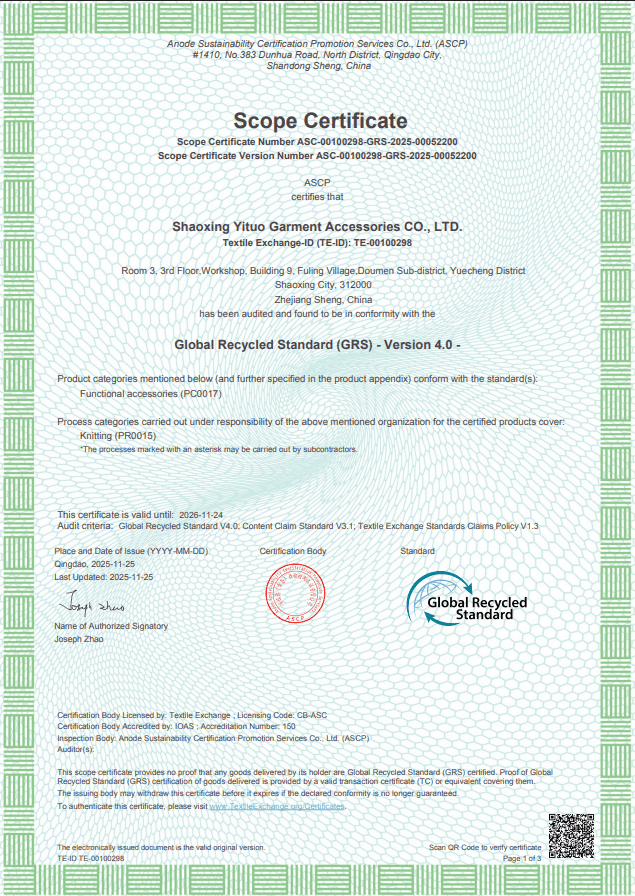
Finally, B2B procurement in today’s climate demands compliance. Ensure your factory holds OEKO-TEX® Standard 100 certification, proving the lace is free from harmful substances (heavy metals, azo dyes). For sustainable lines, inquire about GRS (Global Recycled Standard) certified polyester yarns.

Master Your Supply Chain with Shaoxing Yituo

Shaoxing Yituo Clothing Accessories Co., Ltd. represents the pinnacle of textile engineering. From highly technical Raschel knitting and intricate Schiffli embroidery to uncompromising DTM accuracy and global DDP logistics, we are the invisible architecture behind world-class apparel brands. Do not compromise on your material sourcing.

Initiate Custom Sample Development

Direct Factory Inquiries: info@yituoembroidery.com | Specializing in OEM & ODM Bulk Production
Comments

    Comments are closed

    YiTuo Logo
    We supply lace fabrics to manufacturers, garment factories, and textile wholesalers worldwide.
    Contact Details
    Address: No. 3, 3rd Floor, Workshop, Building 9, Fuling Village, Shaoxing, Zhejiang Province, 312000, China
    Email: info@yituoembroidery.com
    BOSS phone:+86 18106884966
    Whatsapp:+44 7549881294
    © Shaoxing Yituo Garment Accessories Co Limited. Copyright 2026. All rights reserved.
    Contact Us & Get A Free Quote
    Thank you for reaching out YiTuo Embroidery.
    We'll get back to you within 48 hours.
      Contact Us & Get A Free Quote
      Thank you for reaching out YiTuo Embroidery.
      We'll get back to you within 24 hours.