Wholesale Lace Fabric Manufacturer & Bulk Supplier | Custom Lace
Wholesale Lace Fabric: Sourcing Direct from a Trusted Manufacturer In the global apparel and textile…


In the textile and lace fabric industry, selecting the perfect combination of embroidery base fabric and thread is essential for achieving visually stunning and durable designs. To help B2B buyers make informed decisions, this guide breaks down the key factors to consider when sourcing embroidery materials.
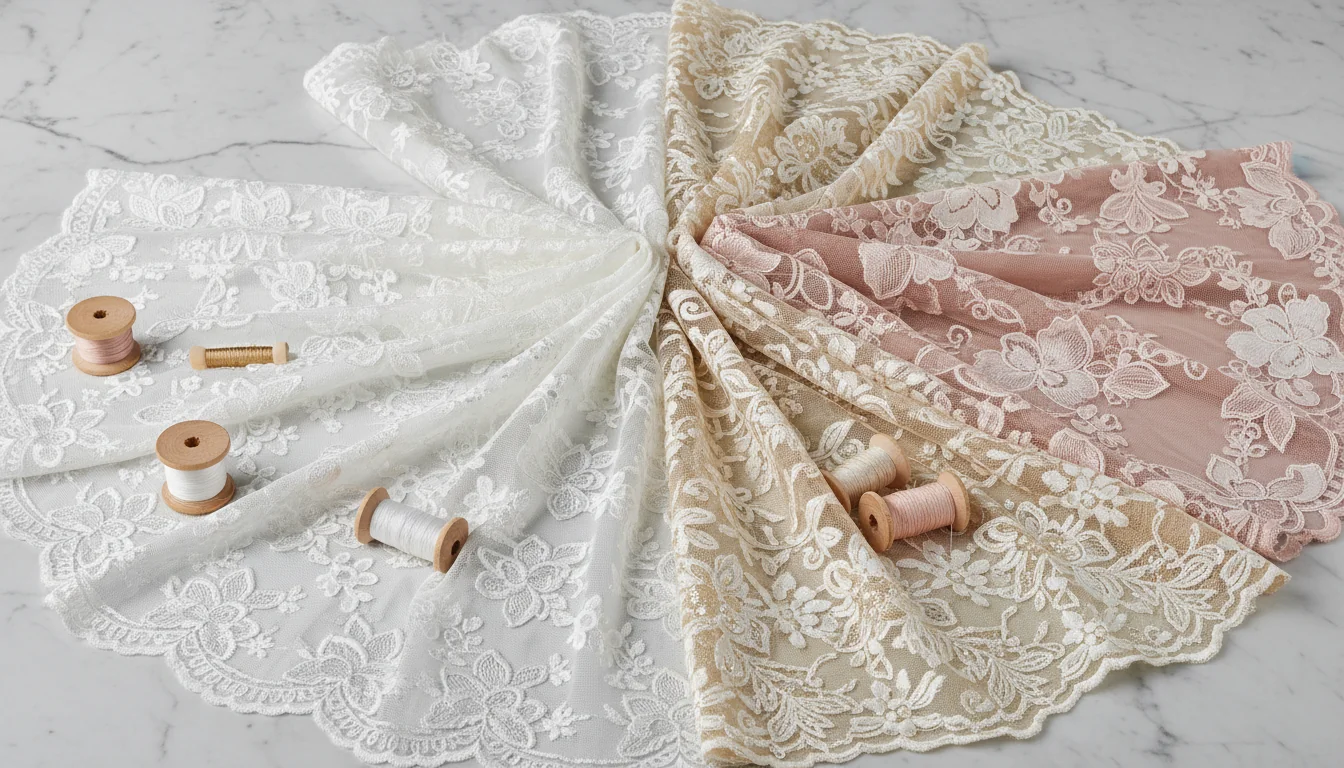
Tulle and mesh fabrics are excellent options for creating delicate and lightweight designs with a dreamy aesthetic. When selecting these materials for embroidery, ensure the mesh offers sufficient stability to withstand dense stitching without tearing. Stability is particularly crucial for intricate embroidery patterns.
Cotton poplin remains a timeless choice for embroidery, especially for techniques like Broderie Anglaise. Its crisp and smooth texture provides an ideal canvas for precise needlework, allowing embroidered designs to stand out with clarity and elegance.
Organza fabric is renowned for its sheer and structured qualities, making it a fantastic choice for high-fashion applications such as ruffles and voluminous sleeves. Its stiffness helps maintain architectural shapes, adding a sophisticated touch to couture-level embroidery projects.
Rayon embroidery threads are prized for their luxurious silk-like sheen and softness, making them a top choice for premium apparel and accessories. However, rayon threads require careful handling, as they may lose strength when exposed to moisture. For high-end designs, rayon delivers unmatched elegance and refinement.
Polyester threads are the industry standard for durability and practicality. Their colorfast properties ensure that embroidered designs resist fading and bleaching, while their strength and cost-effectiveness make them ideal for large-scale production in both fashion and home textiles. Polyester threads are a reliable choice for creating vibrant and long-lasting embroidery.
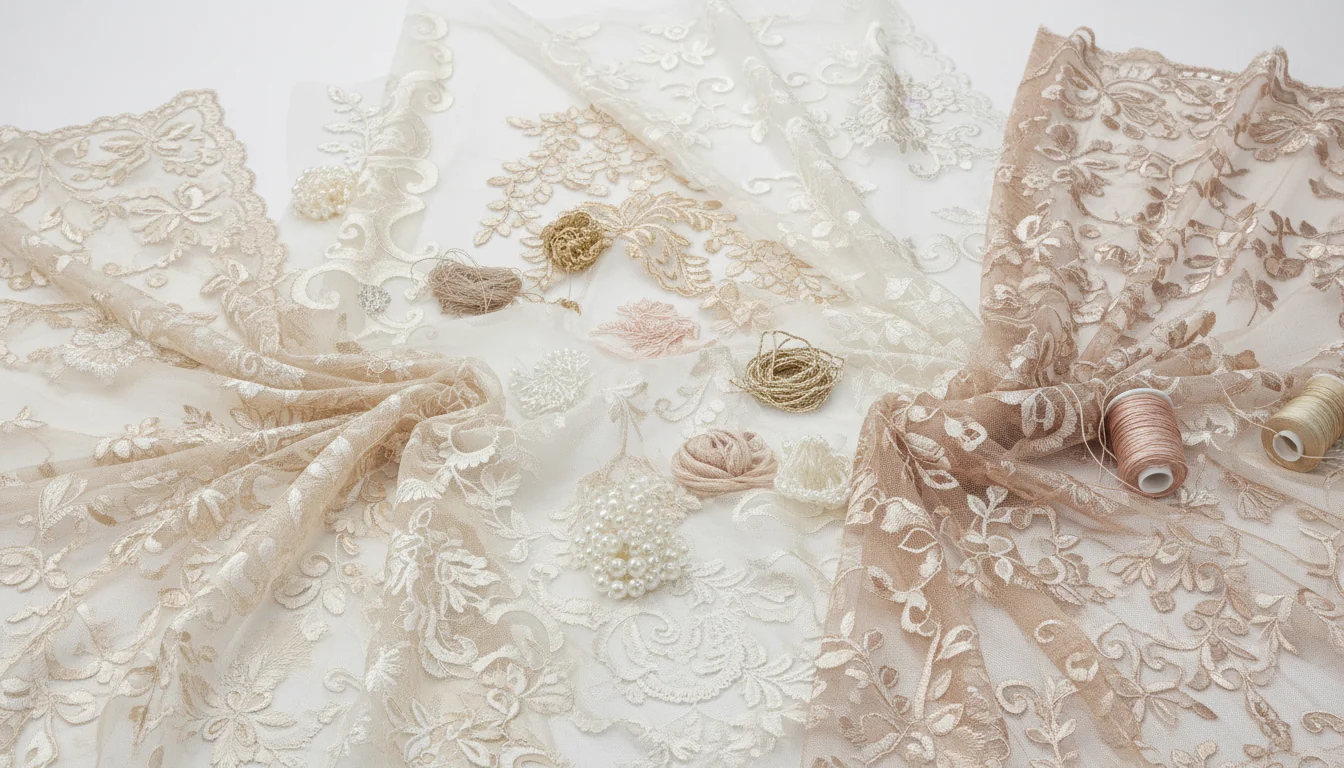
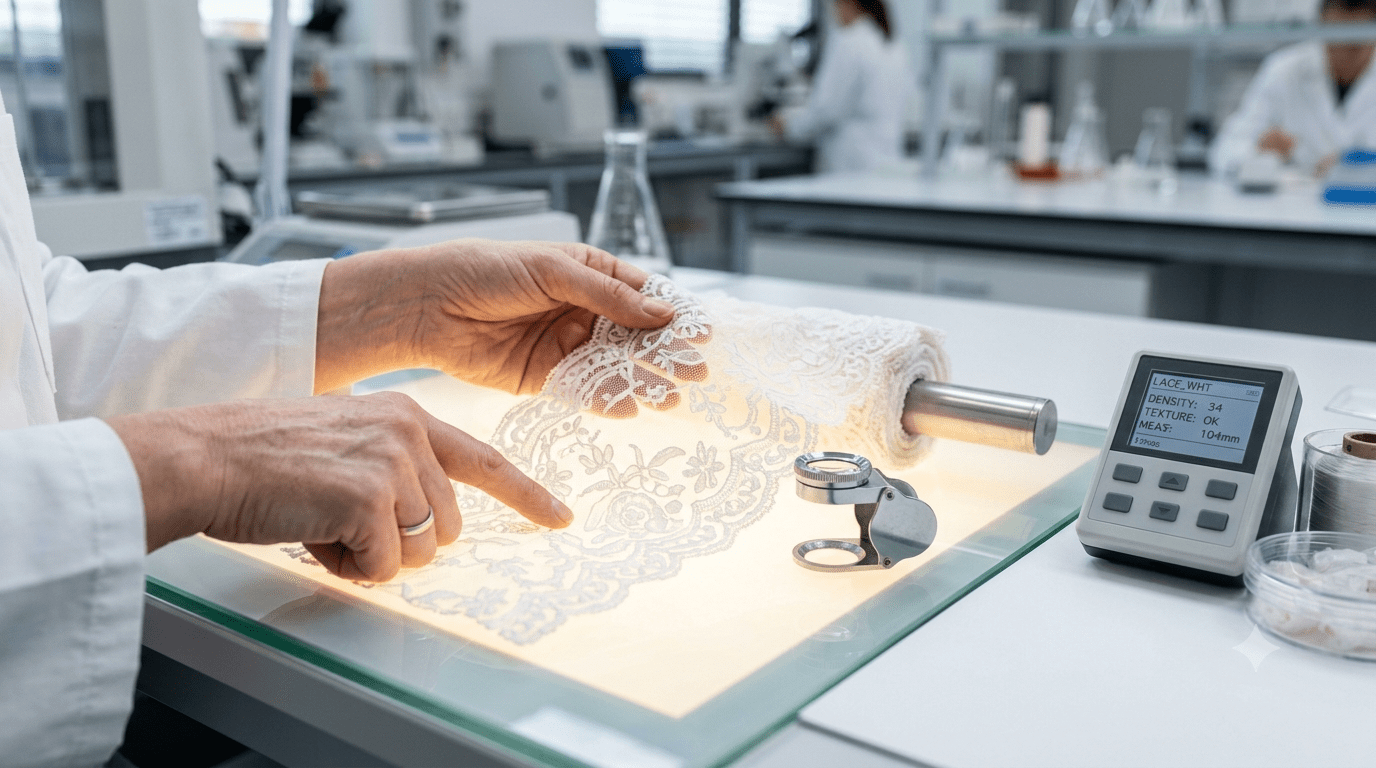
To ensure the embroidery meets professional standards, B2B buyers should carefully evaluate wholesale samples using the following criteria:
By prioritizing these quality factors during the sourcing process, buyers can confidently select embroidery materials that meet both aesthetic and functional requirements.